
Malaysia’s coffee culture has evolved far beyond the daily cup of kopi. As more drinkers seek out single-origin beans, Arfak coffee from the highlands of West Papua, Indonesia, offers a story worth knowing: one about the farmers who grow it, the forests around it and the communities connected to every harvest.
That shift reflects a broader global trend. The specialty coffee market is projected to grow at a CAGR of 10.4% between 2025 and 2030, with Asia-Pacific growing even faster as consumers seek higher-quality, ethically sourced coffee with a clear origin.
Yet some of the most meaningful coffee stories begin far from city cafés, in places where cultivation is closely tied to culture, conservation and community.
Table of Contents
Where Arfak Coffee Grows Alongside the Forest
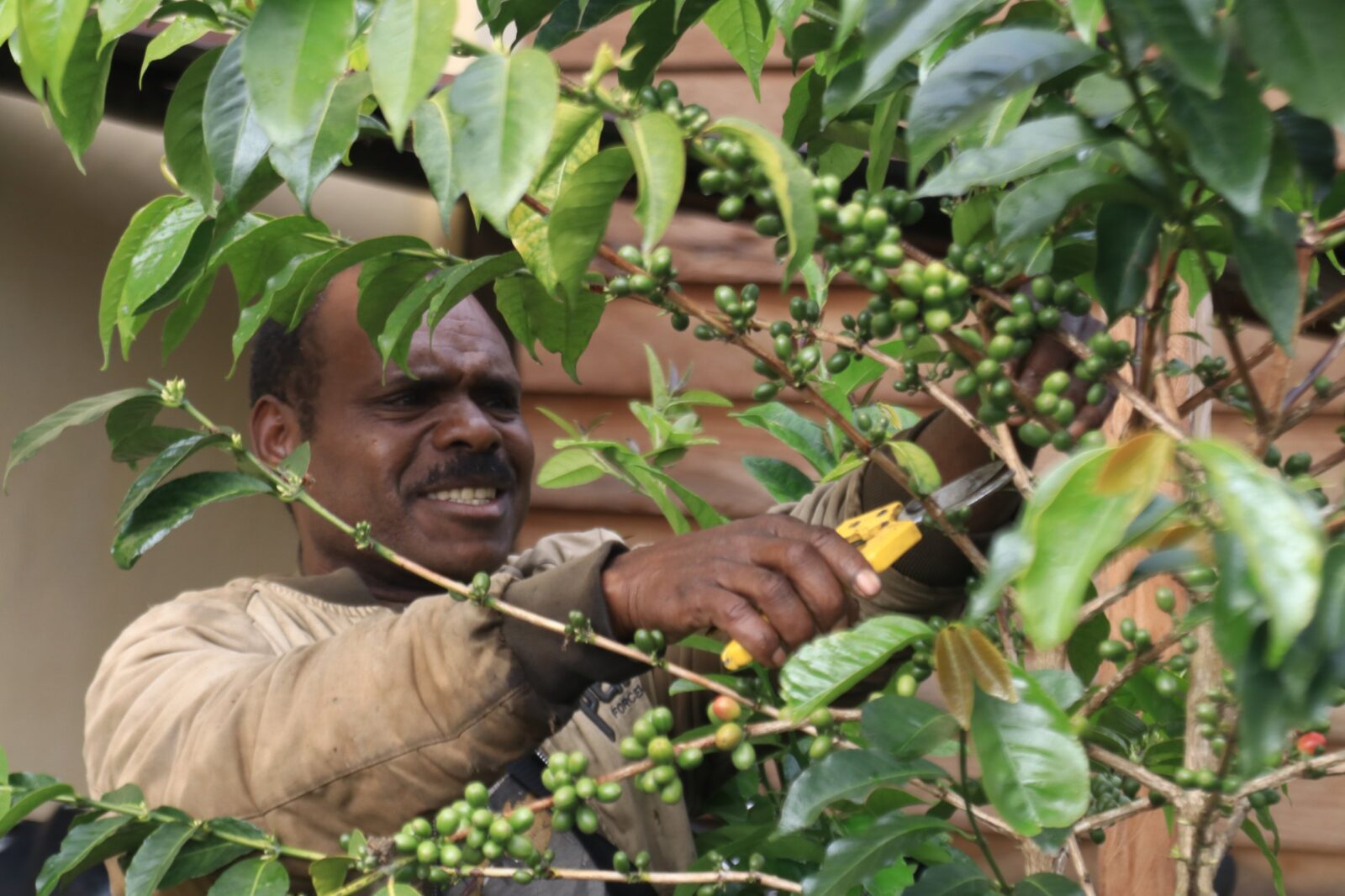
At around 1,800 to 2,000 metres above sea level, the Arfak Mountains provide ideal conditions for Arabica. Coffee has long grown in household gardens here, alongside vegetables, fruits and other crops.
For years, though, coffee was not seen as valuable. Families planted only a few trees for personal use, and some plants were left unmanaged or removed.
“Before 2018, coffee was only one or two trees per farmer. Some planted it but did not know what to develop it into. Some were even cut down because they were considered to have no value,” said Barto Inden, a local youth involved in developing Arfak coffee.
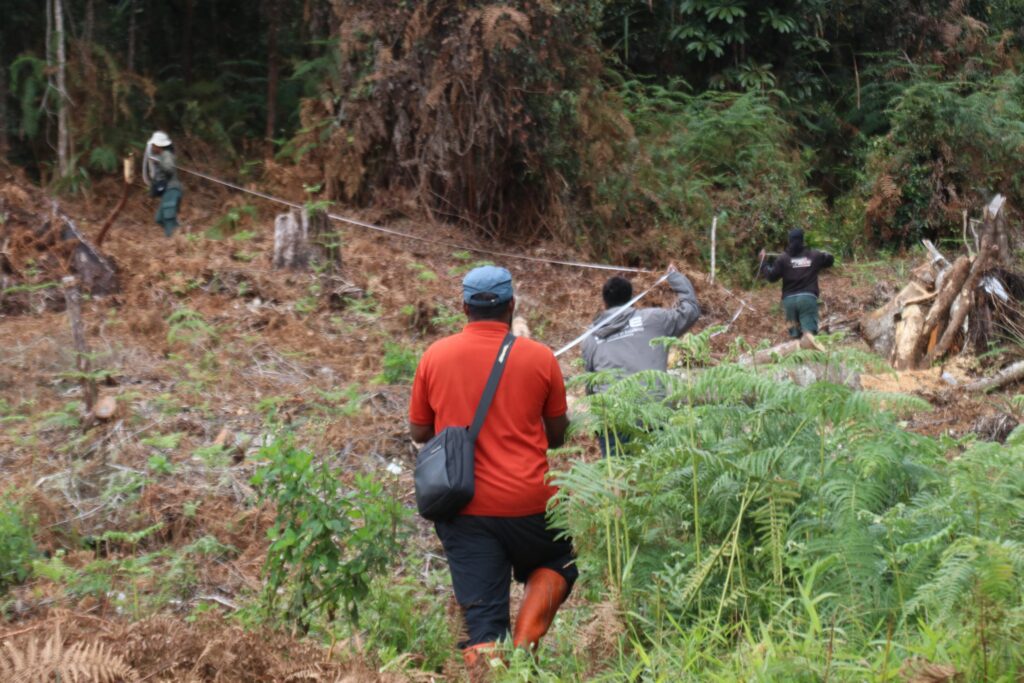
That began to change as communities saw coffee as both an income source and part of a more sustainable way to manage their land. This matters, as the Arfak Mountains face land clearing, heavy rainfall and upstream activities that threaten local water sources.
Through mixed planting and avoiding land burning, Arfak coffee cultivation helps strengthen soil, protect water catchment areas and support healthier ecosystems.
Building a Coffee Economy From the Ground Up
The transformation of Arfak coffee gained momentum when Bentara Papua, a Manokwari-based social organisation focused on sustainable natural resource management since 2005, began working with communities in 2019.
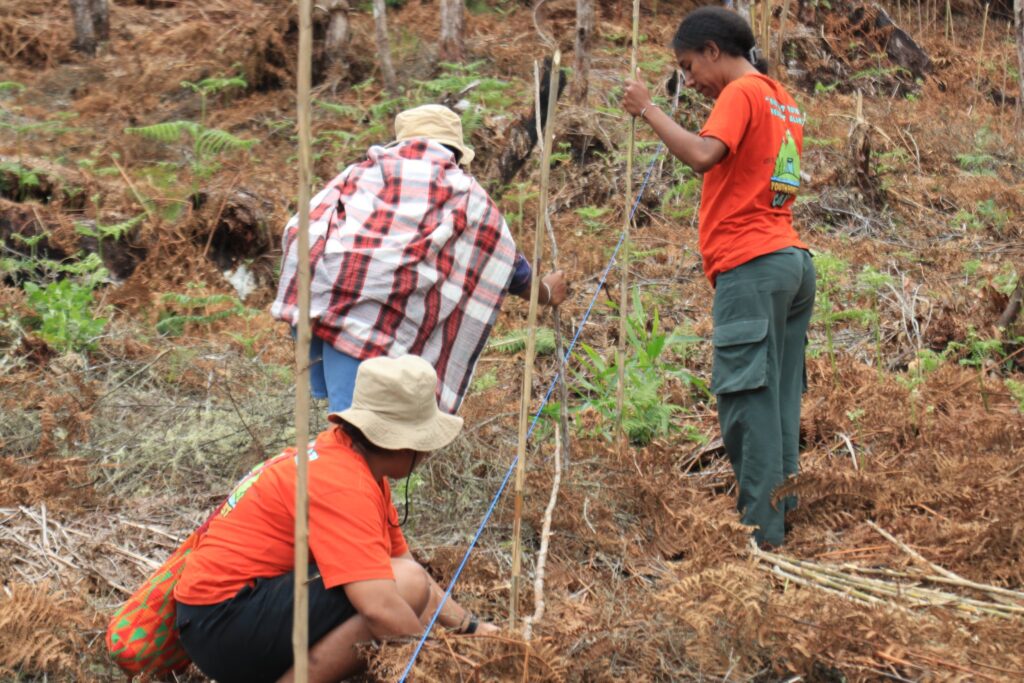
Rather than introducing a ready-made system, it built on existing community practices through technical training, production improvements and market access.
“We did not bring a finished system. We learned together with the community from their own gardens, and from there we assessed the potential of this coffee in accordance with the community culture,” said Demius Aud, Coordinator of the Udohotma Station of Bentara Papua.
Through Bentara Papua’s Merdesa Village School (SEKAM), local youth are trained in coffee cultivation, natural resource management and processing. The Udohotma Station doubles as a learning and production hub for farmers.
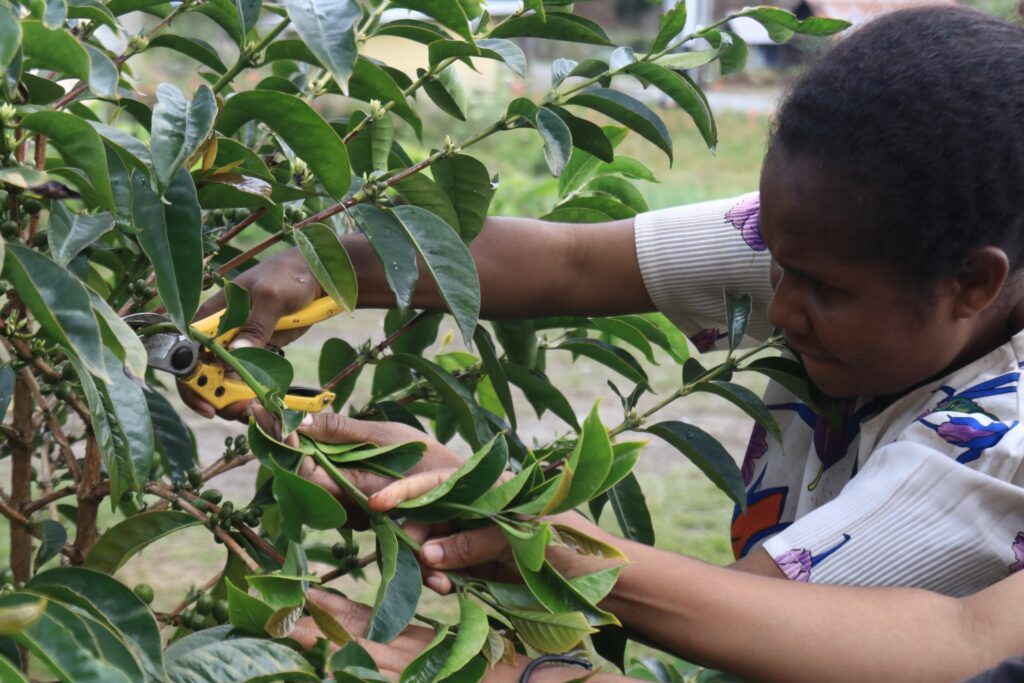
Support ranges from nursery management and organic fertiliser production to post-harvest processing. Farmers learn to use local materials, such as compost from livestock waste, fallen leaves and kitchen waste, and natural pest control using local plants.
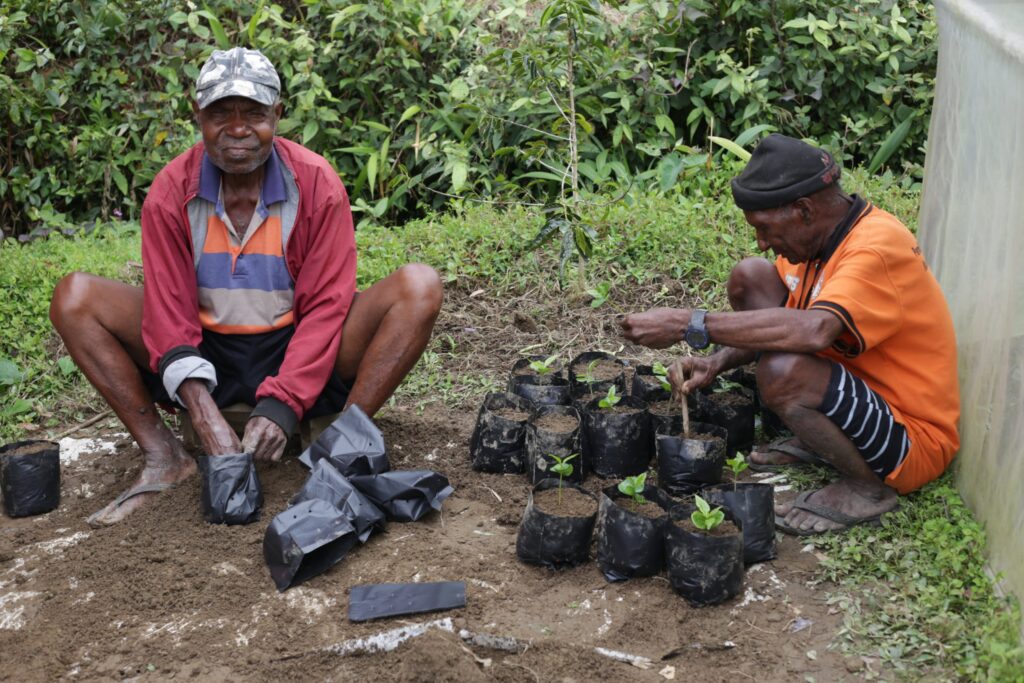
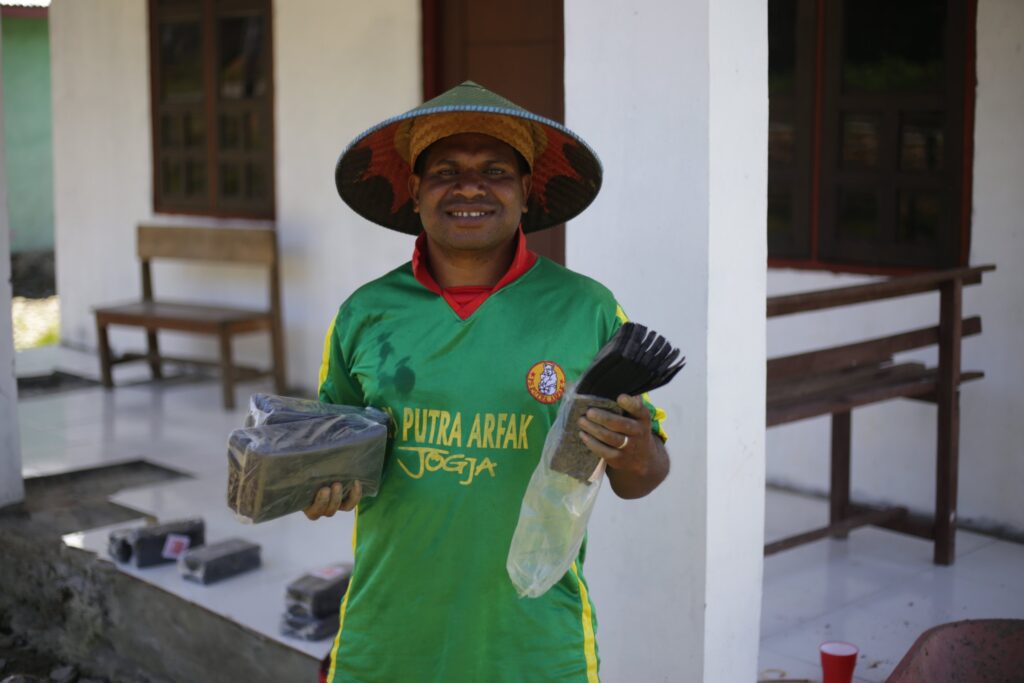
Quality control steps such as fruit sorting, fermentation, washing and solar drying help keep the coffee consistent.
From Highland Farms to Global Coffee Markets
Today, Arfak coffee involves 37 farmer groups across seven districts, with household gardens spanning about 35 hectares.
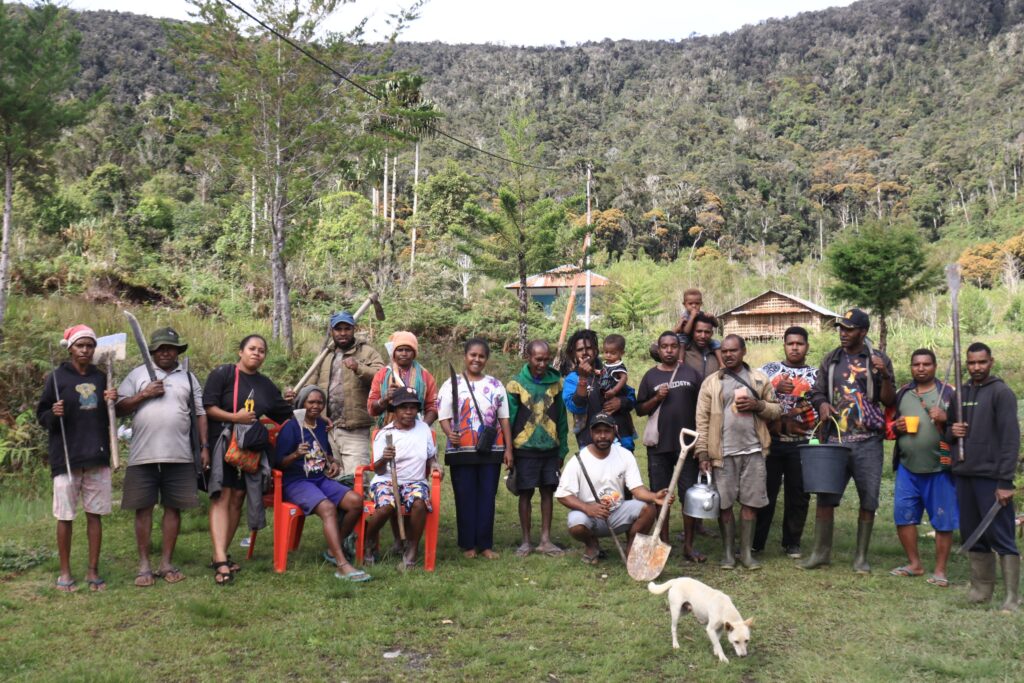
Instead of relying on intermediaries, the coffee is bought directly at production sites, so more value stays within the community.
Sold under the Kopi Anggi brand as green beans, roasted beans and ground coffee, it has reached coffee shops in Manokwari and drawn interest from international buyers, including in Poland, Germany and the Netherlands. Demand is growing, but production stays focused on quality over rapid expansion.
For Barto, the goal extends beyond selling more coffee. “My hope is that this is not just about production, but about the future of the people and nature of the Arfak Mountains,” he said.
Why Arfak Coffee Matters to Malaysian Coffee Drinkers
For Malaysian coffee drinkers, Arfak offers a reminder that every cup carries a story beyond taste, one shaped by the landscapes, communities and choices behind its journey from farm to café.
The story of Arfak coffee reflects a growing movement in specialty coffee, where value is measured by impact as well as flavour. By protecting forests, supporting communities and preserving traditional relationships with nature, coffee can become more than a commodity. It can become a pathway towards a more restorative economy.
For more on Malaysia’s coffee scene, read how Luckin Coffee passed 120 outlets in Malaysia.