
Soya milk and breast cancer are often mentioned in the same breath, and many Malaysian women still wonder whether drinking soya raises their risk. Soo Sek Yow, Head of Soya Nutrition Unit at HOMESOY, says more than 30 years of research point the other way.
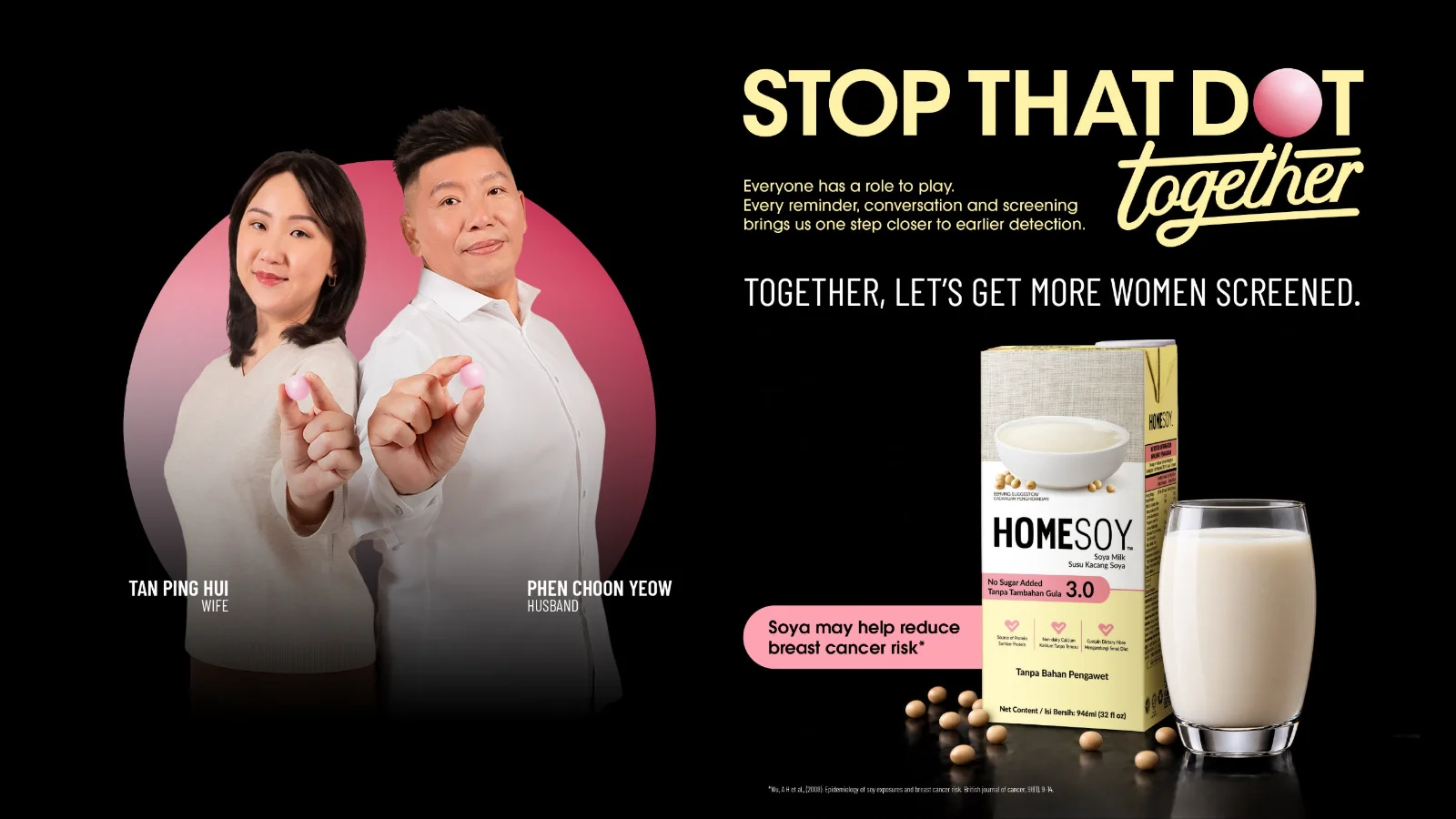
Following October’s Breast Cancer Awareness Month, Soo has taken on four common beliefs about soya, from soya milk and breast cancer to life after treatment, pregnancy and gout. She speaks as HOMESOY’s Stop That Dot Together campaign continues to give a free pack of HOMESOY 3.0 Soya Milk to women who go for breast cancer screening at more than 40 medical centres nationwide.
Earlier in the campaign, the brand worked with the National Cancer Society Malaysia to sponsor 100 free mammograms for lower-income women. This time the focus is on the food itself, and on the misinformation that can shape what people choose to eat.

Table of Contents
Why Soya Milk and Breast Cancer Keep Getting Linked
Soya is hardly new to Malaysians. Many grew up with a warm bowl of tau foo fah after dinner, fresh soya milk from the neighbourhood stall or a cold carton on a hot afternoon.
Even so, Soo says soya is still surrounded by misconceptions, especially when it comes to women’s health. She points out that it is one of the most closely studied foods in nutrition science, and that much of that research contradicts the myths still going around today.
Myth 1: Soya Contains Hormones, So It Causes Breast Cancer
This is the most common worry about soya milk and breast cancer. It comes from isoflavones, natural compounds in soya that are classed as phytoestrogens.
The name sounds like oestrogen, but Soo explains that phytoestrogens come from plants and do not behave like human oestrogen in the body. According to her, they compete with the body’s own oestrogen and limit its activity, which may help lower breast cancer risk.
Decades of research, she adds, have found no evidence that eating soya causes breast cancer. Observational studies have consistently found that Asian women who eat more soya have a lower risk of the disease, though studies of this kind show a link rather than proof of cause and effect.
Myth 2: Breast Cancer Survivors Should Avoid Soya
Large studies involving thousands of breast cancer survivors, published in The American Journal of Clinical Nutrition, have found that moderate amounts of soya food are safe. The same research links soya intake with better survival and a lower chance of the cancer coming back.
Soo’s advice to survivors is not to cut soya out of fear. Foods such as soya milk can stay part of a balanced diet, alongside guidance from their healthcare team.
Myth 3: Pregnant Women Shouldn’t Drink Soya Milk
Expectant mothers are often told that soya isoflavones could affect a baby’s development. Soo says clinical reviews and large population studies, including work published in Frontiers in Nutrition, show that moderate soya intake during pregnancy is safe and does not harm hormone levels or pregnancy outcomes.
Fortified soya milk, she notes, gives mothers-to-be protein and calcium, both important for mother and baby. HOMESOY 3.0 Soya Milk is one fortified option. “Like any wholesome food, moderation and balance remain key,” Soo said.
Myth 4: Soya Causes Gout
Soya contains purines, which is why some people with gout steer clear of it. Soo says research shows plant purines do not raise uric acid levels in the blood or trigger gout flare-ups, unlike purines from red meat, organ meats and some seafood.
Several large population studies have even linked soya foods with a lower risk of gout. For people trying to eat less animal protein, she says soya can be a high-protein option that fits a balanced, low-purine diet.
Evidence Over Hearsay
Soo’s wider point is that everyday food choices, including questions about soya milk and breast cancer, should rest on evidence. “Nutrition advice should be guided by evidence, not outdated myths or misinformation,” she said.
She describes soya as a nutrient-rich source of high-quality protein with a place in a balanced Malaysian diet. For a simple way to fit protein into everyday meals, see our guide to the Malaysian Healthy Plate.
Knowing the science, she adds, lets people enjoy soya with confidence and focus on the health habits that make a real difference. For women, one of those habits is regular breast screening, which is where the campaign comes in.
How to Take Part in Stop That Dot Together
- What you get: a free pack of HOMESOY 3.0 Soya Milk when you go for breast cancer screening at a participating location.
- Where: more than 40 medical centres nationwide, including Sunway Medical Centre, Subang Jaya Medical Centre, Prince Court Medical Centre, and participating KPJ and Columbia Asia hospitals.
- Find a centre near you: search participating hospitals by state on HOMESOY’s Stop That Dot Together page.
- Campaign partner: National Cancer Society Malaysia.
- Before you go: confirm the offer with the medical centre when you book your screening.
This article is for general information only. Speak to your doctor before changing your diet, especially if you are pregnant, have gout, or are being treated for or recovering from cancer.