
Malaysia’s push into artificial intelligence, 5G and other emerging technologies is changing the skills companies need. It is also opening a wider discussion about who gets to take part in that growth.
For women in Malaysia’s digital economy, access to technology skills is only one part of the picture. Leadership opportunities, career pathways and workplace support will also influence whether more women can move into decision-making roles as industries change.
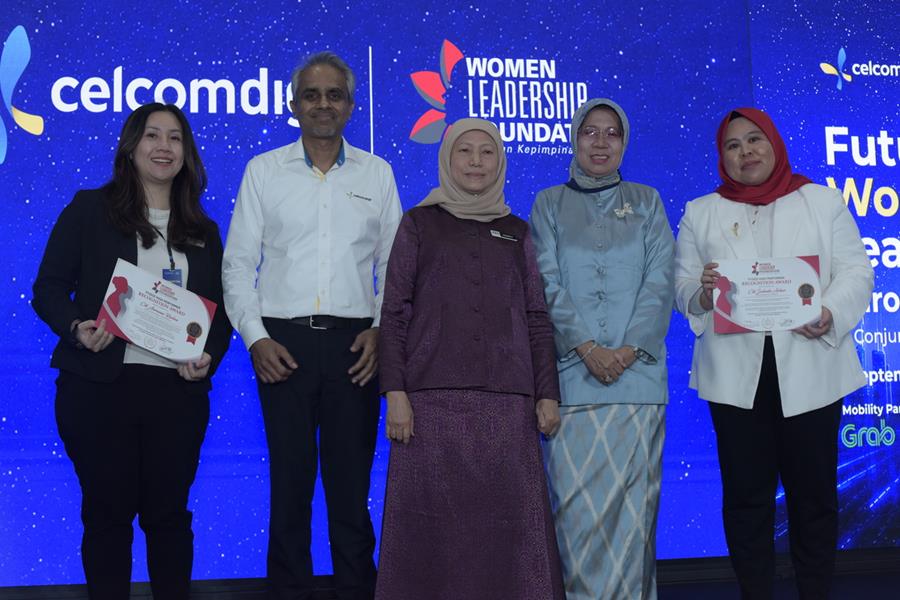
That was among the main themes at Future-Ready Women: Leading Malaysia Through Transformation, a National Women’s Day 2026 programme co-hosted by the Women Leadership Foundation (WLF) and CelcomDigi Berhad in Petaling Jaya.
More than 200 representatives from government, industry and the corporate sector attended the programme.
Malaysia’s Female Workforce Participation Continues to Grow
Women already play a substantial role in Malaysia’s workforce, although there is still room for greater participation and representation in leadership.
According to figures cited during the event from the Department of Statistics Malaysia (DOSM), Malaysia’s female labour force participation rate reached 56.6% in the fourth quarter of 2025.
The figure points to continued progress. But as more jobs become influenced by AI, automation and digital systems, participation alone may not be enough.
Workers increasingly need opportunities to learn new skills throughout their careers. For women returning to work, moving between industries or seeking management positions, access to relevant training can make a practical difference.
Minister of Women, Family and Community Development YB Dato’ Sri Hajah Nancy Shukri said women should be able to participate in the digital economy with confidence.
She highlighted the need for learning opportunities at different stages of life, while recognising that people do not always begin with the same access to skills and opportunities.
Training, she added, should connect to real pathways in employment, entrepreneurship and career progression.
AI Skills Are Becoming Part of the Leadership Conversation
Digital transformation is no longer limited to technology departments.
AI tools are entering areas such as customer service, finance, communications, operations and human resources. That means digital confidence is becoming relevant across a much broader range of jobs.
The Petaling Jaya programme reflected this shift.
Participants visited CelcomDigi’s AI Experience Centre, known as AiX, where they were introduced to applications involving AI and 5G and how these technologies could affect the workplace.
The discussion went beyond learning how new technology works. It also considered how people can lead organisations through periods of technological change.
That distinction matters.
Malaysia will need workers who can use emerging tools, but it will also need managers and decision-makers who understand their impact on businesses, employees and customers.
Building AI skills in Malaysia therefore has a wider purpose than filling technical positions. It can help strengthen the country’s broader leadership pipeline.
Women’s Leadership Can Strengthen the Talent Pipeline
The event also brought leadership experience into the conversation.
Former Chief Justice of Malaysia Tun Tengku Maimun Tuan Mat, the country’s first woman to hold the position, took part in a Power Session reflecting on her leadership journey and the experience of driving change at the highest levels of national institutions.
A separate panel explored technological disruption, digital transformation, AI adoption and changing workforce expectations.
For WLF, these discussions form part of a longer effort to increase women’s participation in leadership and decision-making.
The non-profit organisation marks its fifth anniversary in 2026. Since its establishment in 2021, its work has included mentoring, executive education, advocacy, research and partnerships involving government, industry and academia.
WLF chief executive officer Emylia Anwar said becoming future-ready should not be viewed simply as understanding technology.
“For us at WLF, being future-ready is not simply about understanding new technologies,” she said.
She added that women also need to be prepared to make decisions, lead organisations, shape policy and create opportunities as the economy changes.
This makes leadership development increasingly connected to Malaysia’s wider skills agenda.
Technology Companies Have Their Own Role to Play
Companies can influence that progress through hiring, training and internal promotion.
CelcomDigi said women account for 49% of its workforce of about 2,850 employees. They also hold 42% of leadership roles across the company.
Representation is lower in its Technology and Innovation leadership functions, where women account for 15%.
That gap is significant because technology leadership will become increasingly influential as Malaysian companies invest in AI, automation, cybersecurity and digital infrastructure.
Increasing the number of women in technology in Malaysia will therefore require attention not only to entry-level recruitment but also to career progression.
CelcomDigi chief executive officer Albern Murty said technology may be changing how people work, but talent remains central to that transformation.
“As AI and digitalisation reshape industries, it is important that women are equipped with the skills and support needed to succeed,” he said.
Partnerships between employers and organisations focused on leadership development could help create clearer routes from skills training into management and decision-making positions.
Why Women’s Participation Matters to Malaysia’s Economy
Malaysia’s digital ambitions depend heavily on talent.
Businesses adopting AI and other digital systems need people who can understand the technology, apply it responsibly and translate it into better products, services and working practices.
Leaving a large part of the workforce behind would narrow that talent pool.
Greater female participation can also support businesses looking for skilled workers at a time when digital capabilities are becoming important across industries, not just within technology companies.
There is a public benefit as well.
Better access to digital skills can give women more options to enter growing industries, move into higher-value jobs or build businesses of their own. Stronger representation in leadership can also bring a wider range of experiences into decisions that affect employees and customers.
The challenge is to make those opportunities practical.
Training programmes need to connect with jobs. Employers need credible pathways for advancement. Women entering or returning to the workforce need ways to build skills without assuming everyone has followed the same career path.
Partnerships Could Help Close the Gap
Programmes involving government, industry and leadership organisations cannot solve workforce gaps on their own. They can, however, bring different parts of the talent ecosystem closer together.
Government policy can support participation and training. Companies know which skills are becoming important inside the workplace. Education and leadership organisations can help people build the confidence and capabilities needed to advance.
Bringing these groups together could become more valuable as technological change speeds up.
For Malaysia, the wider opportunity is not simply to increase technology adoption. It is to develop enough people who can guide that transformation.
Women will be an important part of that equation.
Building a More Inclusive Digital Economy
Malaysia’s transition towards a more technology-driven economy will create new jobs while changing existing ones.
Making sure women can participate in that transition is both a workforce issue and an economic one.
The progress seen in female labour force participation provides a foundation. The next challenge is building stronger connections between digital skills, employment opportunities and leadership progression.
Initiatives such as the WLF-CelcomDigi programme put those issues on the same table.
The longer-term measure of success, however, will be whether more women gain the skills, opportunities and influence to help shape Malaysia’s next stage of economic growth.