
Malaysia’s traditional textiles are finding new places in contemporary fashion, as designers explore ways to keep heritage craftsmanship relevant to a new generation of consumers.
That movement was visible at The Curve in Petaling Jaya, where Malaysian fashion house ARLINA AYOU recently opened a boutique bringing Malaysian batik fashion, songket, tenun and other traditional techniques into a modern retail setting.
The opening is more than another addition to the Klang Valley fashion scene. It reflects a wider effort among Malaysian designers and artisans to turn traditional skills into products that can remain commercially relevant while retaining their cultural roots.
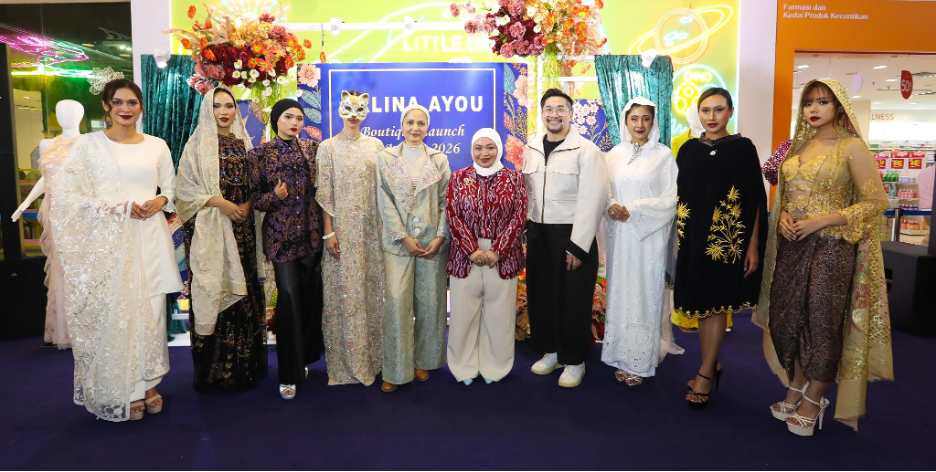
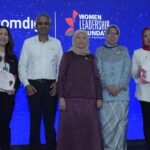
Arlina Amdan, Founder and Creative Director of ARLINA AYOU (left), with Royal Guest of Honour Yang Amat Mulia Hajah Sharifah Khatreena Nuraniah binti Tuanku Syed Faizuddin Putra Jamalullail (centre), and Cyrus Chin, Founder of Bravo Events and President of MODA (right), surrounded by models.
Bringing Malaysian Craft Into a Modern Retail Space
The boutique, located at Level LG1 of The Curve, was launched with a fashion showcase attended by guests from Malaysia’s fashion and creative sectors, media and government.
Yang Amat Mulia Hajah Sharifah Khatreena Nuraniah binti Tuanku Syed Faizuddin Putra Jamalullail attended as Royal Guest of Honour. The event was organised by Bravo Events and Entertainment and included selected designs from ARLINA AYOU as well as a performance by Tiga Soul.
Yet the stronger story sits behind the runway.
ARLINA AYOU works with hand-drawn batik canting, hand-block batik cap, songket, tenun, embroidery and beadwork. These are skills that depend heavily on experienced craftspeople and, in some cases, considerable production time.
Founder and creative director Arlina Amdan said batik represents more than the finished fabric because it carries the work and stories of the people who produce it.
“Every design starts with me, but it comes to life through the artisans I work with,” she said, describing the boutique as another way to keep the craft visible and evolving.
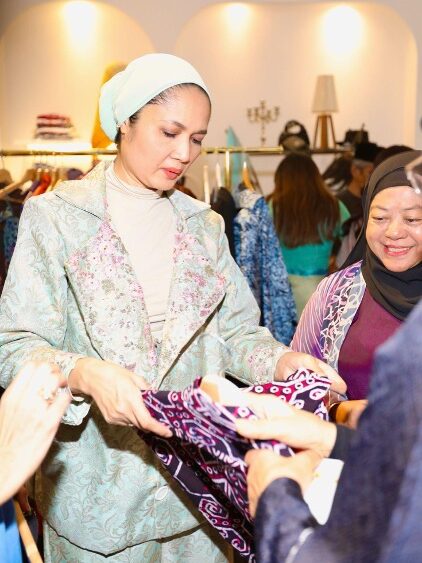
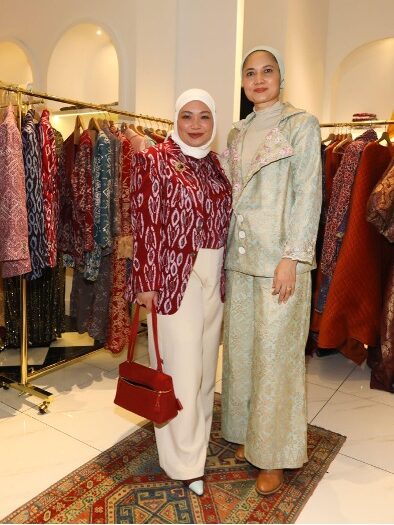
Arlina showcased her designs to guests in attendance and shared her journey in batik preservation with Royal Guest of Honour Yang Amat Mulia Hajah Sharifah Khatreena Nuraniah binti Tuanku Syed Faizuddin Putra Jamalullail
A Retail Model Built Around Craftsmanship
ARLINA AYOU has spent nearly three decades developing fashion around Malaysian textile traditions.
Its production network includes skilled artisans and specialist makers across the East Coast, Selangor, Kuala Lumpur and East Malaysia. Arlina begins collections with her own sketches before the designs move through different stages of specialist production.
For particularly detailed couture and bridal garments, that process can take more than 500 hours.
This kind of production sits far from mass-market fashion. Its value depends on specialist knowledge, manual skills and the ability to translate traditional techniques into pieces that contemporary customers are willing to wear and buy.
The new boutique gives that process a physical retail presence.
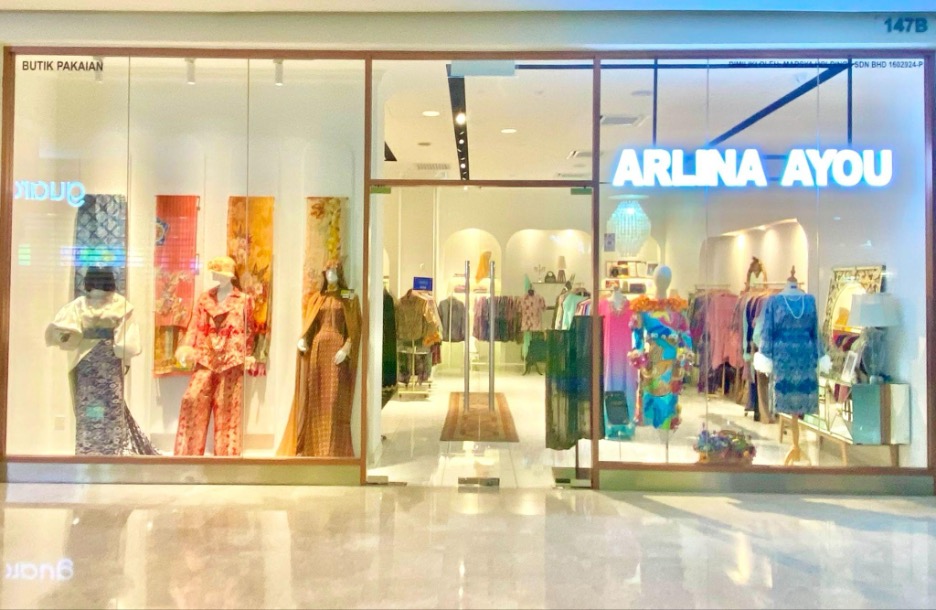
The ARLINA AYOU Boutique at Level LG1, The Curve, welcomes shoppers and loyal clientele alike
Alongside its Premium Ready-to-Wear range, the store carries Atelier, Couture and Bridal collections. Customers can also access styling consultations, private appointments, made-to-measure services and bespoke design consultations.
For traditional textile businesses, this combination of craftsmanship and personalised retail can offer another route to sustaining higher-value work.
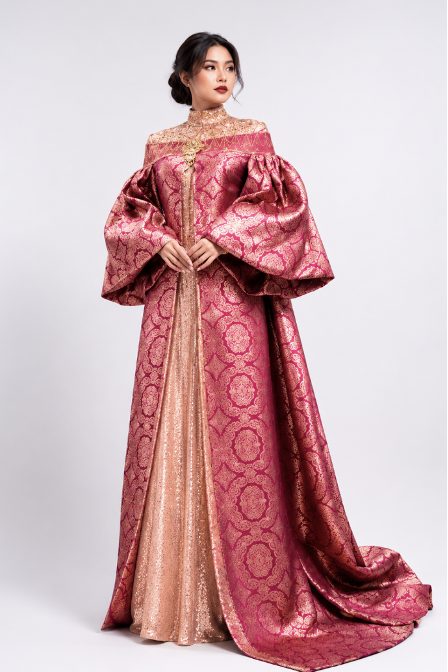
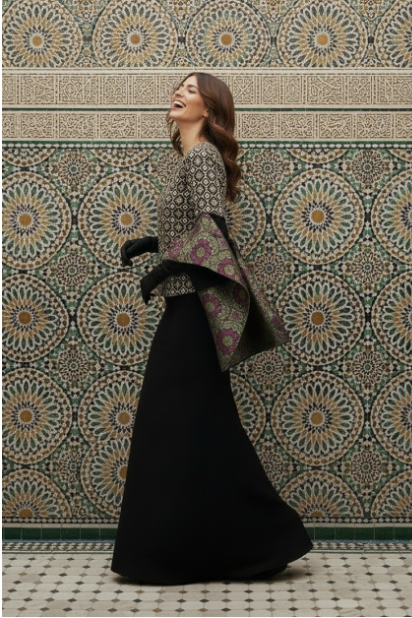
ARLINA AYOU’s designs are driven by a balance of heritage and contemporary style, now available both online and in store.
Malaysian Textile Heritage Meets Contemporary Fashion
Batik has long been part of Malaysia’s cultural identity, but its place in fashion continues to change.
Designers increasingly face the challenge of respecting established techniques without treating heritage textiles as museum pieces or clothing meant only for ceremonial occasions.
ARLINA AYOU takes the latter approach.
Its collections place batik and songket into contemporary silhouettes designed for weddings and formal events as well as celebrations and everyday use.
That shift matters because preservation is difficult without participation. Traditional skills have a stronger chance of remaining economically viable when people continue commissioning, producing and wearing the work.
For artisans, this creates demand for specialised knowledge. For designers, it provides a distinctive local design language in a fashion market filled with international influences.
It also gives consumers another way to engage with Malaysian heritage through something practical and visible.
Fashion Can Play a Role in Malaysia’s Creative Economy
Malaysia’s fashion industry is part of a broader creative economy that connects designers, craftspeople, retailers, event organisers, shopping centres and tourism.
Heritage-led fashion adds another layer to that ecosystem.
A single garment using batik, embroidery, beadwork or weaving may involve several specialised contributors. When designers build sustainable demand for these techniques, the economic impact can extend beyond the fashion label itself to workshops and independent makers.
There is also an important question of skills.
Traditional textile knowledge often takes years to develop. Keeping those skills commercially useful can encourage their transfer between generations rather than allowing specialist knowledge to gradually disappear.
ARLINA AYOU’s artisan network across several Malaysian regions shows how contemporary fashion can connect urban retail demand with craft production elsewhere in the country.
The model is still relatively specialised, but it illustrates how cultural heritage can take part in a modern value chain.
A Timely Link With Visit Malaysia 2026
The boutique opening also comes as Malaysia places greater attention on culture and tourism through Visit Malaysia 2026.
Fashion can contribute to that story in a different way from conventional tourism attractions.
Visitors increasingly encounter a country through its food, design, music, architecture and locally made products. Malaysian textiles can form part of that experience, especially when their origins and craftsmanship are presented clearly.
ARLINA AYOU has already taken its designs outside Malaysia, with collections shown on international fashion platforms in Abu Dhabi, London, the Netherlands and Jakarta.
Its Modern Heritage collection has featured Malaysian songket and batik through contemporary silhouettes, giving overseas audiences another entry point into the country’s textile traditions.
The opportunity now is not simply to display heritage internationally, but to build a stronger domestic ecosystem around it.
Supporting a Wider Malaysian Design Community
The growth of local fashion also depends on collaboration within the industry.
Arlina serves on the committee of the Malaysian Official Designers Association (MODA), which works to support Malaysian designers and create opportunities within the local design community.
That industry-building role matters as independent designers compete for consumer attention against large international fashion brands.
Malaysian labels have one advantage that cannot easily be replicated: direct access to the country’s cultural knowledge, materials and craft traditions.
Turning that advantage into sustainable businesses requires more than creative design. It needs skilled workers, retail access, industry networks and customers who see value in locally produced work.
Physical spaces such as the new boutique can help connect those pieces.
Why This Matters for Malaysia
The public value of heritage fashion goes beyond clothing.
When traditional craftsmanship has a viable market, artisans have stronger reasons to continue developing and passing on their skills. Local designers gain opportunities to build businesses around Malaysian identity rather than relying entirely on global fashion trends.
There is also potential value for tourism and retail. Distinctive Malaysian products can strengthen the country’s cultural offering for both domestic consumers and international visitors.
The economic scale may be smaller than industries such as manufacturing or technology, but creative businesses contribute in a different way. They turn cultural knowledge into skilled work, commercial products and experiences that help distinguish Malaysia in regional and international markets.
For Malaysian batik fashion, that balance between preservation and commercial relevance will be important.
Keeping Heritage in Everyday Life
ARLINA AYOU’s expansion at The Curve shows one path forward for Malaysia’s textile traditions: keep the craftsmanship intact while giving it a place in contemporary life.
Batik, songket and other traditional textiles do not have to remain tied only to the past. Their future will also depend on designers, artisans and consumers finding new reasons to use them.
As Malaysia puts greater focus on its culture ahead of Visit Malaysia 2026, fashion offers a highly visible way to tell that story.
The strongest outcome would be more than international recognition. It would be a creative economy where Malaysian craftsmanship continues to provide meaningful work, supports skilled communities and remains part of what people actually wear.