
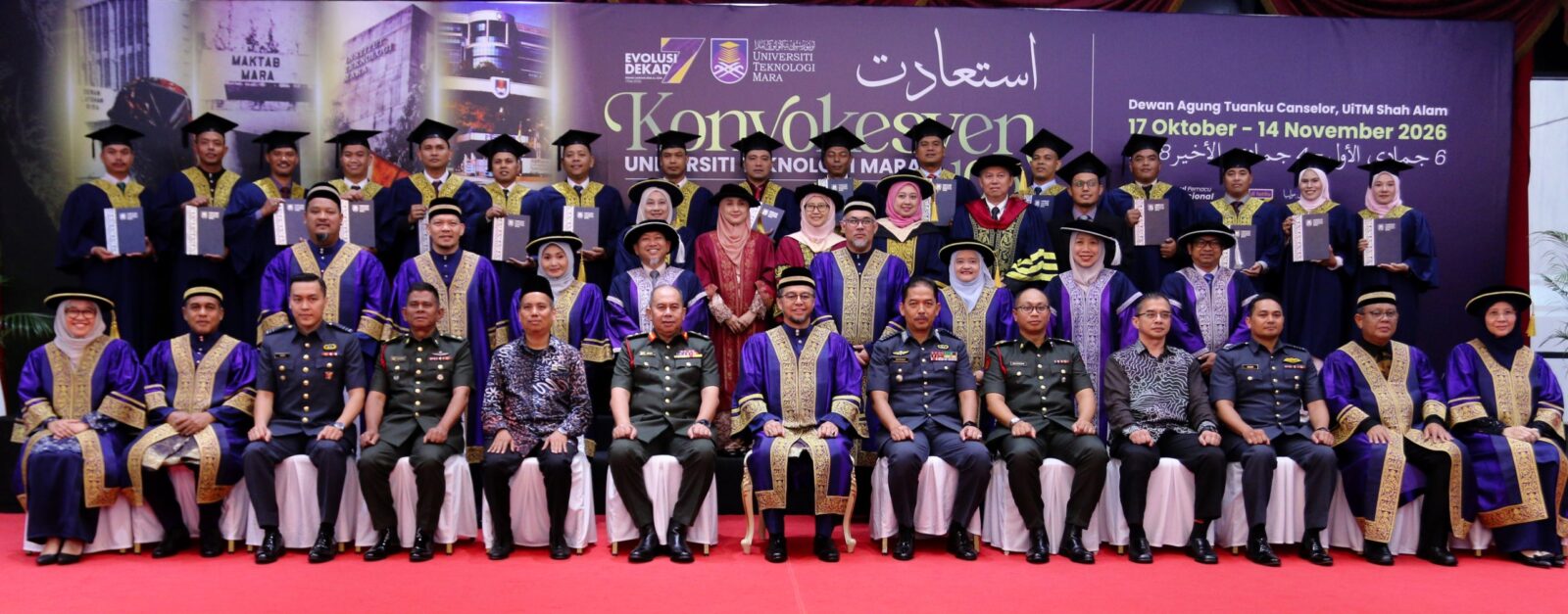
UiTM’s Vice-Chancellor says the programme opens a new door to higher education for working adults, and a second career for those who have served.
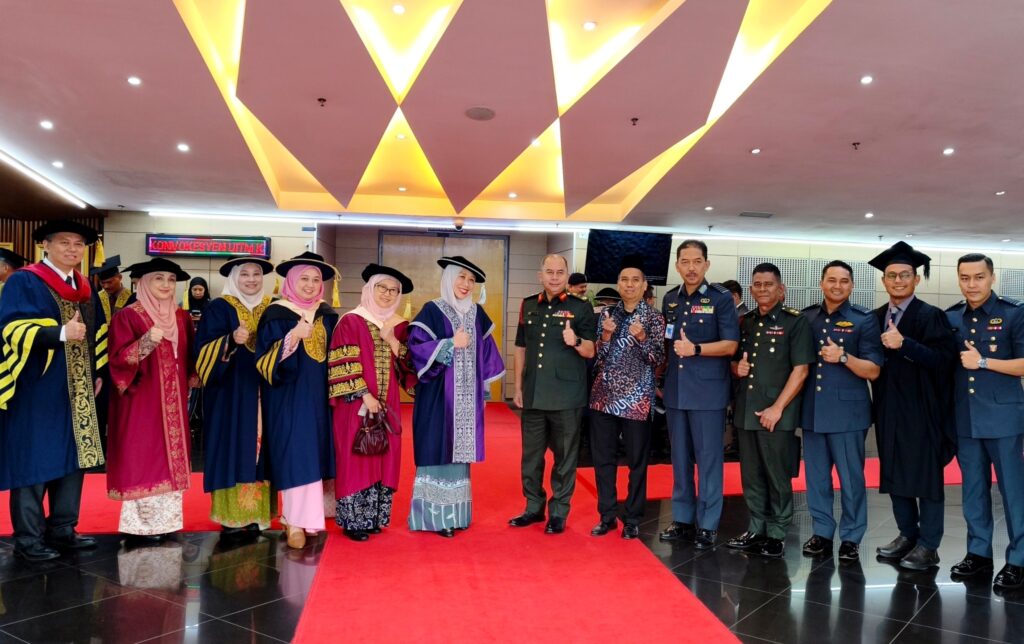
SHAH ALAM, 29 October 2026 – Years of service in uniform have become a university qualification. A total of 231 Malaysian Armed Forces (ATM) personnel from the Work-Based Learning 2.0 (WBL 2.0) UiTM–MINDEF programme were celebrated as graduates at the 105th Universiti Teknologi MARA (UiTM) Convocation, 17th Session, at Dewan Agung Tuanku Canselor, UiTM Shah Alam.
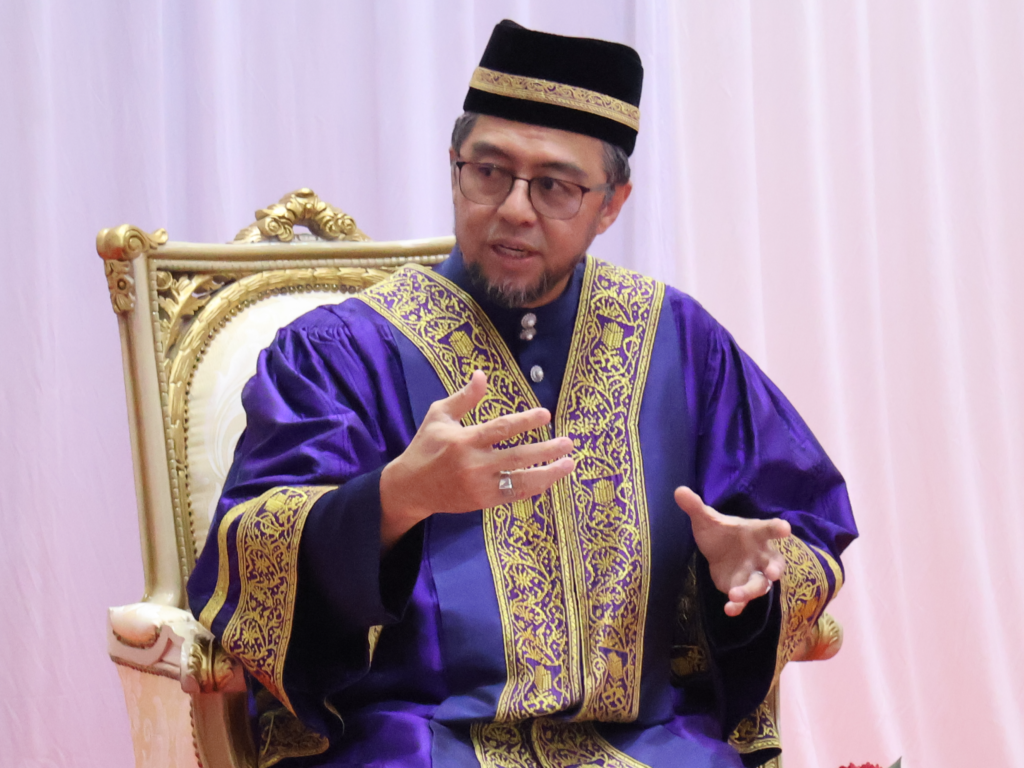
For UiTM Vice-Chancellor Profesor Datuk Ts. Dr. Shahrin bin Sahib @ Sahibuddin, the occasion carried personal meaning. “I’m very touched,” he said in an interview on the sidelines of the convocation, reflecting on a programme he has been closely involved with.
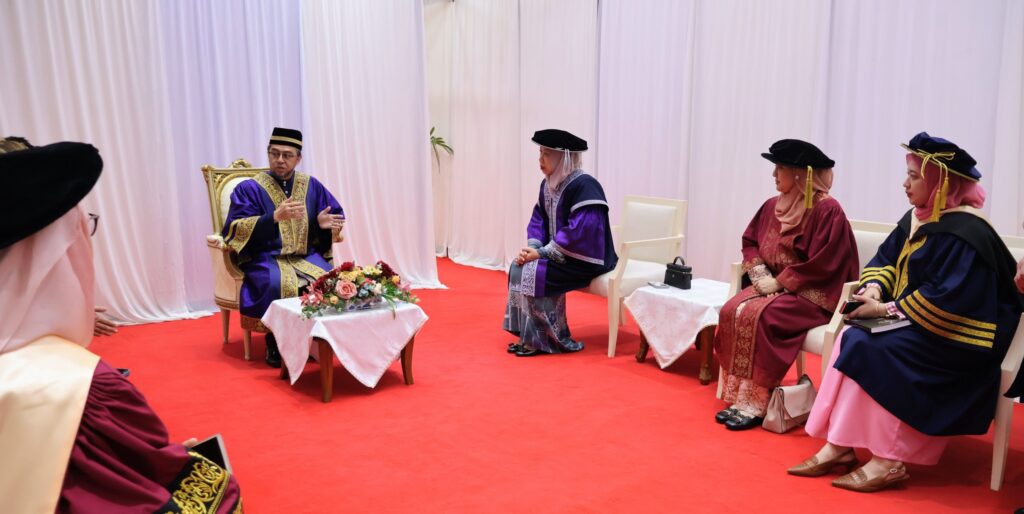
Table of Contents
What Is the WBL 2.0 UiTM–MINDEF Programme?
WBL 2.0 is a strategic initiative between UiTM, through its Institute of Continuing Education and Professional Studies (iCEPS), and the Ministry of Defence (MINDEF). It gives ATM personnel an academic pathway through assessment of their work experience and competencies, so they can upgrade their qualifications without leaving the service.
Prof. Shahrin explained that the diploma recognises what personnel have already mastered on the job. “We award the diploma based on their own expertise and competency, from the work that they have done,” he said. Those in office roles, for example, are matched to office management, while those who serve as religious instructors are matched to Islamic Education.
“We Flip the Coin”: A New Mode of Learning
Prof. Shahrin placed WBL 2.0 alongside UiTM’s existing routes. Accreditation of Prior Experiential Learning (APEL) gives credit for past learning, and the 2u2i model has students spend two years at university and two years in industry, “but the status is still students,” he noted. Part-time study through iCEPS, meanwhile, asks working adults to fit classes around their jobs, on weekends or at night.
“With this one, we flip the coin. They are working adults,” he said. Under the new mode, learners stay at their workplace and earn their qualification without leaving their jobs. While targets are set, he stressed that the bigger goal is a new channel into higher education. “What we are doing actually is just opening up access.”
Mapping Experience to the Curriculum
The process starts with what personnel already know. UiTM maps their training and experience against its existing curriculum, making sure every required element of knowledge, skills and attitude, and every learning outcome, is met and can be proven. Additional assessment requirements apply within a set period. For this cohort, that period was one year, using a portfolio method.
The result, Prof. Shahrin said, is a diploma that stands alongside any other. “If you put the two persons side by side with our fresh graduate, they can perform and have the knowledge and skills,” he said.
The first cohort covered five Diploma programmes: Islamic Education, Sports Studies, Hotel Management, Office Management and Technology, and Culinary Arts.
A Second Career After Uniform
Why build this pathway? Prof. Shahrin pointed to the shape of a military career. Personnel typically serve around 20 years, so someone who enlists at 20 may leave the service at about 40. “Still productive,” he said. Yet most join with only the Sijil Pelajaran Malaysia (SPM).
Without a recognised qualification, decades of experience can count for little after retirement. “Most of them will end up as security guards, odd jobs,” he said. “They have knowledge and skills, but they do not have the qualification.” The diploma, he added, gives them a second chance to stay productive with a qualification of their own.
Opening Doors Beyond the Armed Forces
Prof. Shahrin stressed that UiTM is not alone. Several universities now offer work-based learning, in line with the Ministry of Higher Education’s (KPT) aspiration to widen access to higher education. “More people have access,” he said. UiTM is also extending the approach beyond the Armed Forces. “We are expanding this to every work sector,” he said, wherever employers allow it.
From First Batch to Cohort 2
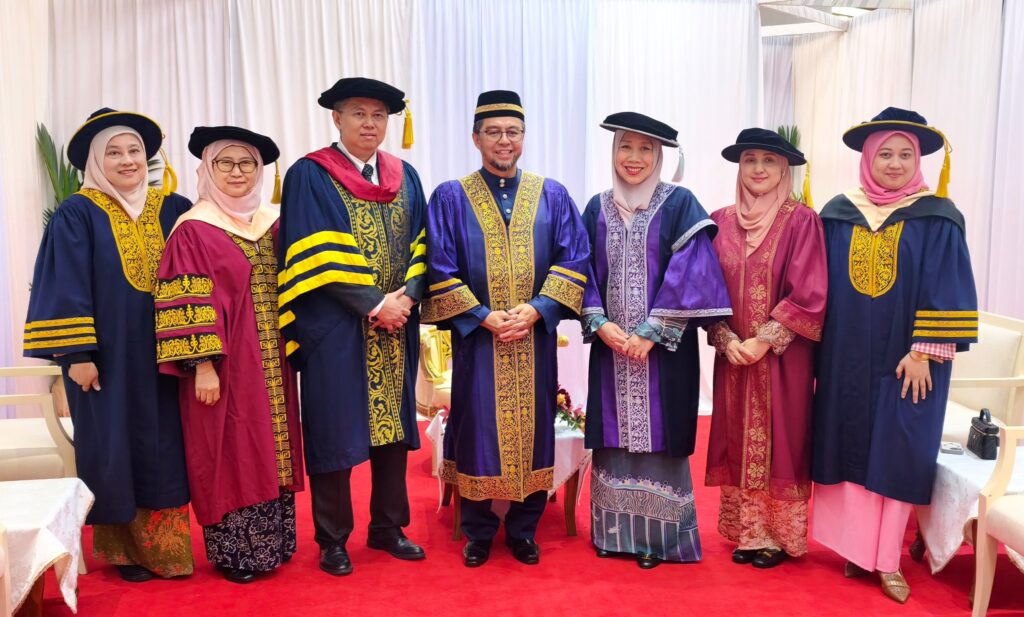
Prof. Shahrin described Cohort 1 as a test of the model itself. “This is the first batch. We want to see whether they can cope, and whether the modules are suitable. We validate the process,” he said, adding that the aim is to make sure these graduates meet the same standard as UiTM’s own.
Cohort 1 was officially launched on 5 November 2025 with 231 ATM personnel. Less than a year later, they crossed the convocation stage as UiTM graduates. The momentum continues with Cohort 2, involving 181 ATM personnel, launched on 26 August 2026, with participants expected to graduate in 2027.
The initiative also strengthens collaboration between UiTM, MINDEF, KPT and the Malaysian Qualifications Agency (MQA). According to UiTM, the success of Cohort 1 reflects its commitment, through iCEPS, to lifelong learning and to recognising work experience as a pathway to knowledge, skills and academic qualifications.
WBL 2.0 at a Glance
- Partners: UiTM (through iCEPS) and MINDEF, with support from KPT and MQA
- Who it is for: serving Malaysian Armed Forces personnel
- How it works: work experience and training mapped to the UiTM curriculum and assessed through a portfolio
- Cohort 1: 231 personnel, launched 5 November 2025, graduated 29 October 2026
- Cohort 2: 181 personnel, launched 26 August 2026, expected to graduate in 2027
- Programmes: five Diplomas in Cohort 1, from Islamic Education to Culinary Arts
About Universiti Teknologi MARA
UiTM is Malaysia’s largest comprehensive university, with 34 campuses, 24 faculties and nine academic centres nationwide. It offers more than 500 academic programmes, from Foundation and Pre-Diploma to Diploma, Bachelor’s, Master’s, PhD and professional programmes, and has more than 700,000 alumni. UiTM is ranked =542 in the QS World University Rankings 2026.