
Malaysia’s push to build a workforce ready for a more digital economy is bringing universities and industry players closer together.
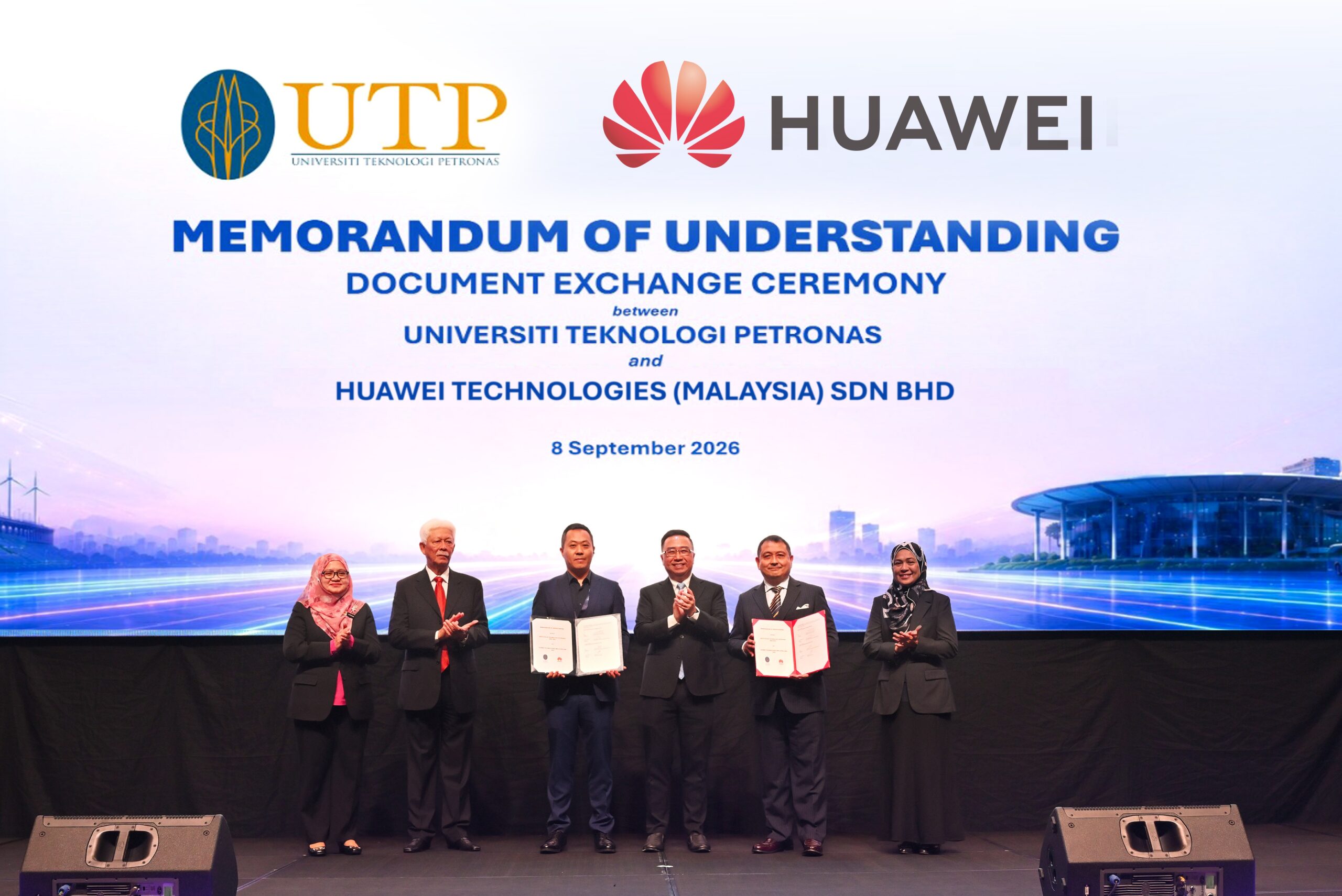
Universiti Teknologi PETRONAS (UTP) and Huawei Technologies (Malaysia) Sdn Bhd have signed a Memorandum of Understanding (MoU) covering education, talent development, knowledge sharing, innovation and graduate employability. The UTP Huawei Malaysia partnership also aims to give students and educators greater exposure to industry needs and emerging workplace trends.
The agreement comes as universities face growing pressure to prepare graduates not only with academic knowledge, but also with skills that translate into the workplace.
Bringing Industry Experience Closer to Students
Under the MoU, UTP and Huawei Malaysia may work together on seminars, conferences, workshops and academic engagement programmes.
The framework also covers innovation and entrepreneurship activities, skills development and graduate employability initiatives. Knowledge sharing between industry professionals, students and educators will form another part of the collaboration.
For students, this type of exposure can help narrow the gap between classroom learning and the expectations they will meet after graduation.
It also gives universities a closer view of changing industry requirements, particularly as digital technologies reshape job roles and the skills employers need.
Building Skills for a Changing Workforce
Talent development has become an important part of Malaysia’s wider digital growth story. Businesses increasingly need workers who can adapt to new technologies while bringing strong technical and problem-solving skills to their roles.
University-industry partnerships can support that shift by creating more opportunities for students to understand real business challenges before entering the workforce.
UTP President and CEO Ir. Mohamed Firouz Asnan said the collaboration is intended to provide students and the university’s academic community with greater exposure to industry perspectives, emerging trends and opportunities.
The aim, he said, is to strengthen their readiness for the future workforce.
Industry-Academia Collaboration Gains Importance
The partnership is also significant beyond individual training programmes.
Closer industry-academia collaboration can help universities understand how technology and workforce requirements are changing. Companies, meanwhile, gain a platform to engage with young talent and share practical industry knowledge.
Huawei Malaysia Deputy CEO of Enterprise Business Du Xianjun said stronger cooperation between education and industry is important in preparing the next generation for the opportunities and challenges of the digital era.
The company expects the collaboration to cover knowledge exchange, innovation, skills development and engagement between academia and industry.
Supporting Graduate Employability
One practical focus of the MoU is graduate employability.
Technical qualifications remain important, but graduates increasingly enter workplaces where technology, business needs and job functions can change quickly. Exposure to industry while studying can help students better understand those shifts.
The partnership may also create opportunities for entrepreneurship programmes and discussions around emerging trends and future workforce development.
For Malaysia, developing adaptable talent has broader economic value. A workforce with relevant digital and technical skills can support companies as they adopt new technologies, expand operations and move into higher-value activities.
Partnership Unveiled at ESTCON 2026
The MoU exchange took place during UTP’s World Engineering, Science and Technology Congress (ESTCON) 2026 at the Penang Waterfront Convention Centre.
The ceremony was witnessed by Malaysia’s Minister of Science, Technology and Innovation, Datuk Chang Lih Kang.
The setting reflects the wider purpose of the agreement: connecting education, science, technology and industry more closely.
Why It Matters for Malaysia
The public value of the partnership will depend on how its programmes develop in practice. Still, its focus addresses a clear challenge: helping graduates move from university into a workplace shaped by fast-changing technologies.
For industry, stronger links with universities can support access to talent and knowledge exchange. For students, the benefit lies in gaining practical insight alongside formal education.
For Malaysia’s wider development, collaborations of this kind can strengthen the talent pipeline needed to support digitalisation and innovation.
The UTP-Huawei Malaysia agreement now provides a framework for that work. Its longer-term impact will become clearer as specific programmes and opportunities are introduced.
About Huawei
Founded in 1987, Huawei is a leading global provider of information and communications technology (ICT) infrastructure and smart devices. We have 207,000 employees and we operate in more than 170 countries and regions, serving more than three billion people around the world.
Our vision and mission is to bring digital to every person, home and organisation for a fully connected, intelligent world. To this end, we will work towards ubiquitous connectivity and inclusive network access, laying the foundation for an intelligent world; providing diversified computing power where you need it, when you need it, to bring cloud and intelligence to all four corners of the earth; build digital platforms to help all industries and organisations become more agile, efficient, and dynamic; and redefine user experience with AI, making it smarter and more personalised for people in all aspects of their life, whether they’re at home, on the go, in the office, having fun, or working out. For more information, please visit Huawei online at www.huawei.com.