
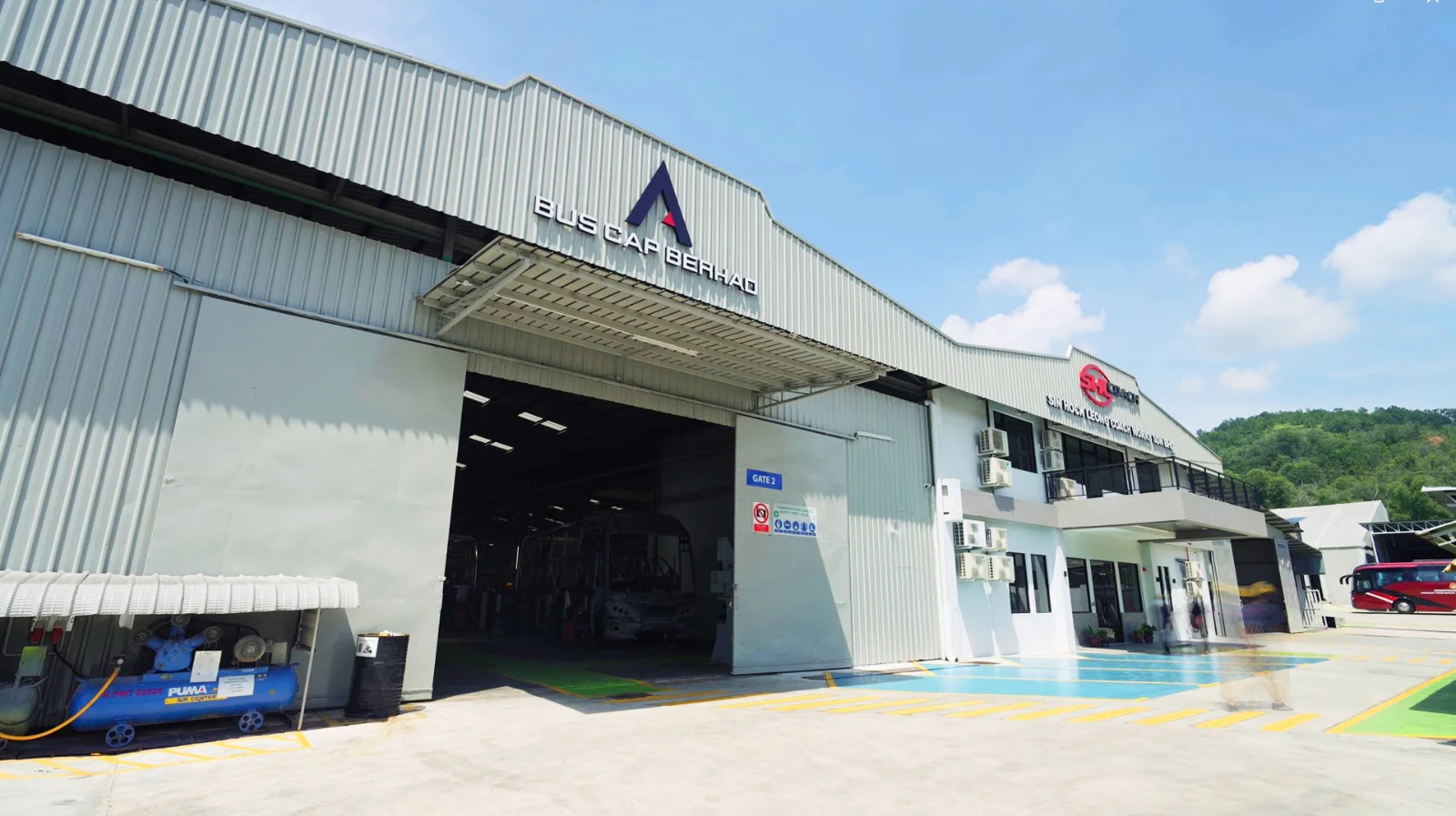
Bus Cap Berhad, the bus builder listed on the ACE Market of Bursa Malaysia (stock code 0455), reported revenue of RM70.19 million and profit after tax (PAT) of RM7.17 million for the nine months ended 30 September 2026 (9MFY2026). Nine months in, the group has already booked 79.7% of the RM88.08 million it earned in the whole of FY2025.
Because Bus Cap only listed on 3 June 2026, there are no year-on-year interim figures to compare against. The comparison that matters for now is against last year’s audited full-year numbers.
Key figures for 9MFY2026
- Revenue: RM70.19 million (79.7% of FY2025’s RM88.08 million)
- Gross profit: RM14.24 million, a margin of 20.3%
- Profit before tax: RM9.49 million
- PAT: RM7.17 million; core PAT of RM8.37 million excluding about RM1.20 million in one-off IPO expenses
- Repair and maintenance revenue: RM1.47 million, 16.7% above FY2025’s full-year RM1.26 million
- Gearing: 0.13 times, down from 0.28 times at end-2025
Third quarter: lower billings, higher profit
For the third quarter alone (3QFY2026), revenue came in at RM23.96 million, against RM26.95 million in the second quarter. PAT, however, rose to RM2.57 million from RM2.07 million.
The second quarter carried the one-off IPO costs of around RM1.20 million, which were not tax deductible. Stripping those out, the group says its nine-month core PAT would have been RM8.37 million.
Repair and maintenance, still a small part of the group, has already outgrown last year. It brought in RM1.47 million over the nine months, 16.7% more than the RM1.26 million it earned in the whole of FY2025. The group says it wants to build recurring income from charging, technical support and ongoing maintenance.
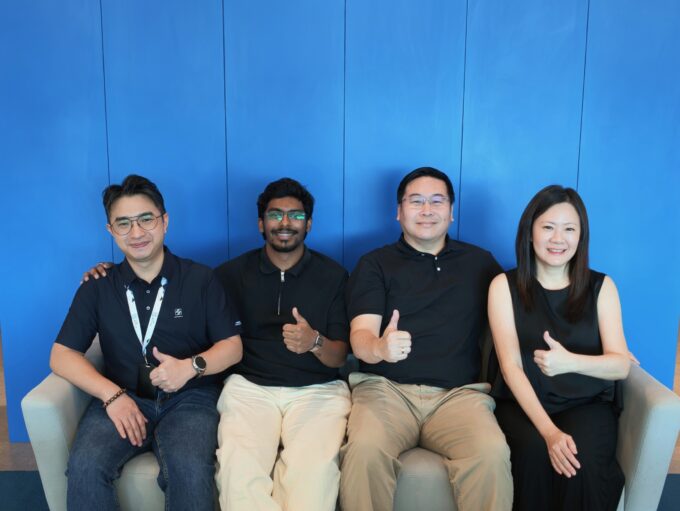
Executive Director Bernard Ng Chong Yan said quarterly billings move with operators’ procurement schedules and the mix of models delivered, while demand for larger semi-high deck and double-deck buses remains healthy.
Our immediate focus is on factory efficiency, cost control, and tighter working-capital management.
Bernard Ng Chong Yan, Executive Director, Bus Cap Berhad
Bus Cap’s balance sheet after the listing
Total equity rose 127.3% to RM53.65 million, lifting net assets per share to 13.99 sen from 6.16 sen. As at 30 September 2026, cash and fixed deposits stood at RM22.36 million, against total borrowings of RM6.78 million.
Bus Cap’s electric bus and charging plans
Bus Cap is also lining up partners for new-energy vehicles. In August 2026 it signed an MOU with BYD Malaysia Sdn. Bhd. to exclusively explore a Malaysia-based new-energy commercial vehicle platform, including a proposed electric bus assembly and manufacturing plant in Perak.
On 20 October 2026, it signed a Memorandum of Strategic Collaboration with Starcharge Energy Sdn. Bhd. covering possible work on EV charging infrastructure, technical support, semi-knocked-down assembly, installation, maintenance and equipment localisation in Malaysia. Both remain subject to definitive agreements and approvals, and the group expects no material financial impact from them in FY2026.
Ng described conventional and electric buses as complementary businesses serving different fleet needs, with the aim of staying involved from charging and technical support through to maintenance to build recurring income.
“Expanding into new-energy mobility broadens our addressable market rather than replacing our core operations,” Ng said. The group calls its guiding philosophy “Build. Connect. Support.”, and says it will keep developing an integrated mobility business alongside its core bus manufacturing.
Outlook
The group says it remains positive on its prospects, pointing to steady fleet demand from bus operators, travel companies and government agencies. It plans to keep improving production efficiency, securing new orders and building out its mobility business across Southeast Asia. For more on the local vehicle market, see our look at Malaysia’s 2026 vehicle registrations, and on interest rates, Bank Negara’s November OPR decision.
This article is for information only and is not investment advice.