
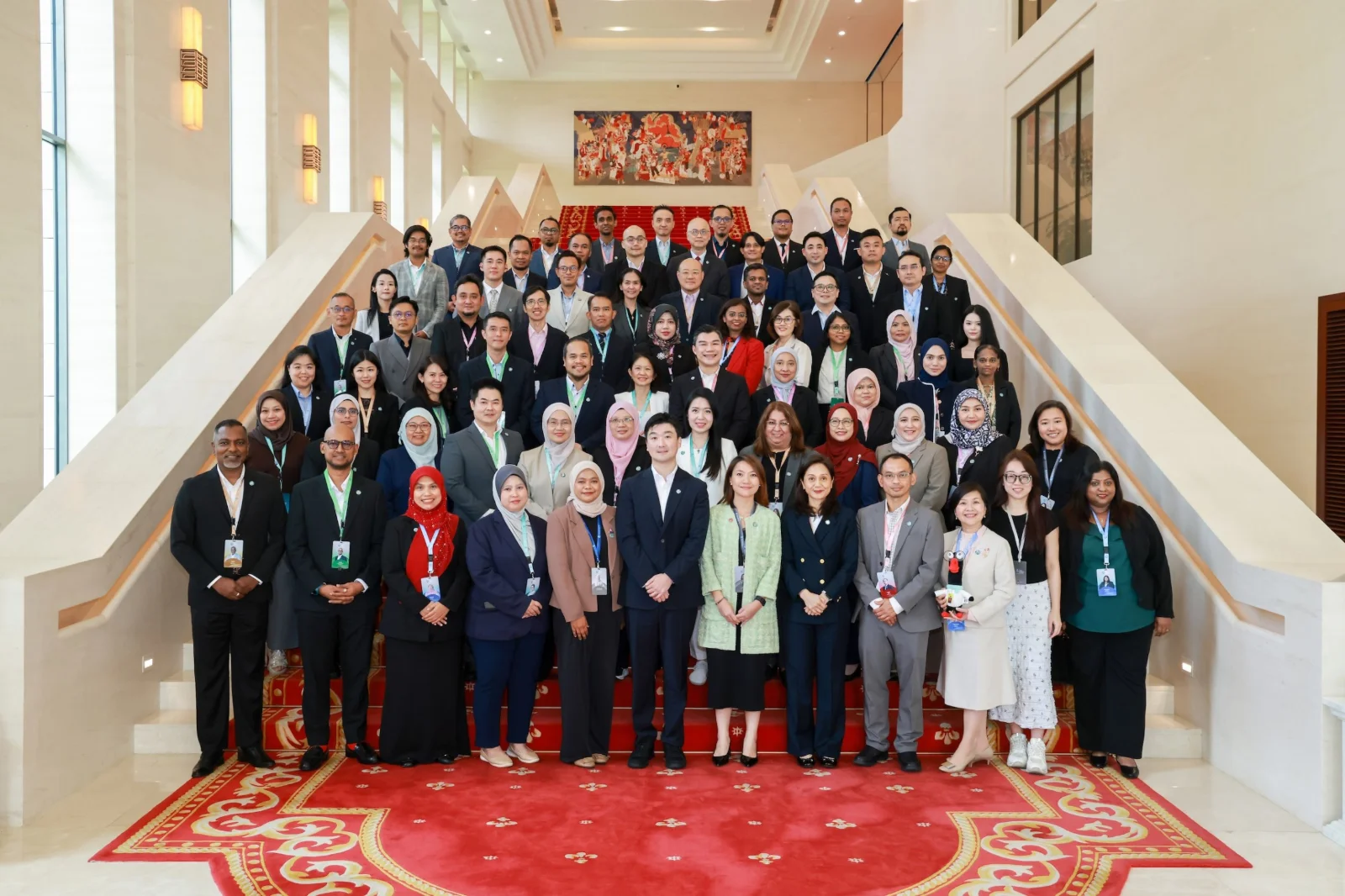
A total of 66 mid- and senior-level leaders have completed the fifth and final cohort of the Digital Leadership Excellence Programme, bringing to a close the initiative run by the Malaysian Communications and Multimedia Commission (MCMC) and Huawei Malaysia since 2024.
Over five cohorts, the programme trained 308 people holding leadership roles in government, academia and industry, passing its target of 300 participants by 2026. The idea was to give the people who run Malaysian organisations a firmer grasp of emerging technologies, and the confidence to drive digital transformation in their own workplaces.
Key figures
- 308 leaders trained across five cohorts, against a target of 300 by 2026
- Cohort 1 (2024): 50 graduates
- Cohort 2 (June 2025): 60 graduates
- Cohort 3 (October 2025): 66 graduates
- Cohort 4 (July 2026): 66 graduates
- Cohort 5, the final intake (announced 25 November 2026): 66 graduates
- 6 capstone projects presented by the final cohort
How the Digital Leadership Excellence Programme worked
The programme traces back to the 2023 Malaysia ICT Summit, hosted by Huawei Malaysia, where Prime Minister Dato’ Seri Anwar Ibrahim called for stronger digital leadership in the country. MCMC and Huawei launched the Digital Leadership Excellence Programme, or DLE Programme, the following year.
Participants went through an intensive hybrid curriculum built around emerging technologies and how to use them to change the way their organisations work.
Every cohort, the last one included, also travelled to China for an industrial immersion programme. There, participants toured research and innovation facilities and saw large-scale digital deployments first-hand, with a focus on how advanced infrastructure is developed and applied at national scale.
Six capstone projects tied to the 13MP
Before graduating, the final cohort of the Digital Leadership Excellence Programme presented six capstone projects aimed at Malaysia’s digital priorities under the Thirteenth Malaysia Plan (13MP). Together they cover digital transformation, artificial intelligence (AI) adoption and innovation, digital talent development and the resilience of the country’s digital economy.
- E-Waste 360: e-waste management in Malaysia
- PulseRating: advancing healthcare digital readiness
- TUNAS: a launchpad for Malaysia’s future AI innovators
- SmartTransfer AI: moving from reactive transfers to national workforce optimisation
- LEGASIKU: a digital asset platform built around wealth legacy and macroeconomic vitality
- SELAMAT (Safe Environment for Learning, Awareness, Monitoring and Trust): an integrated school safety and early-intervention framework
What participants took away
Eric Du, Director of the Board and Executive Vice President of Public Affairs and Communications at Huawei Malaysia, said the partnership with MCMC reflected a shared commitment to building leadership capability. “Malaysia’s digital transformation depends on leaders who can turn technology into meaningful outcomes for their organisations and the wider economy,” he said. He pointed to the final cohort’s projects, from AI talent development to healthcare readiness and school safety, as examples of participants applying digital thinking to national priorities.
For Dr Faizulizami binti Osmin, Senior Principal Assistant Director at the Ministry of Education’s Technical Vocational Education and Training Division, driving digital change inside government has meant dealing with resistance and the challenge of shifting mindsets. “The DLE Programme reminded me that change begins with trust, patience and true leadership,” she said, adding that she now wants to make AI a key part of the ministry’s ecosystem.
Lau Chun Nang, Manager of Network Engineering and Project Deployment at MEASAT Satellite Systems Sdn Bhd, said the programme pushed him to look past the technology itself and lead change across people, processes and organisational culture. TalentCorp Malaysia’s Head of Southern Region and Data Centre Sector, Mohamad Nazib bin Suliman, described it as a nation-building effort that turned participants who arrived as individuals into a group with a shared purpose.
Why it matters
With the fifth cohort, the Digital Leadership Excellence Programme has now ended. Its stated aim was to build leadership capacity for a resilient, inclusive and future-ready digital economy, and its 308 graduates return to leadership roles across government, academia and industry.
The Digital Leadership Excellence Programme sits alongside other talent efforts Huawei has backed in Malaysia this year, including its three-year talent MoU with CelcomDigi and its partnership with Universiti Teknologi PETRONAS.
Founded in 1987, Huawei supplies ICT infrastructure and smart devices and operates in more than 170 countries and regions. More information is available on the Huawei Malaysia website.