
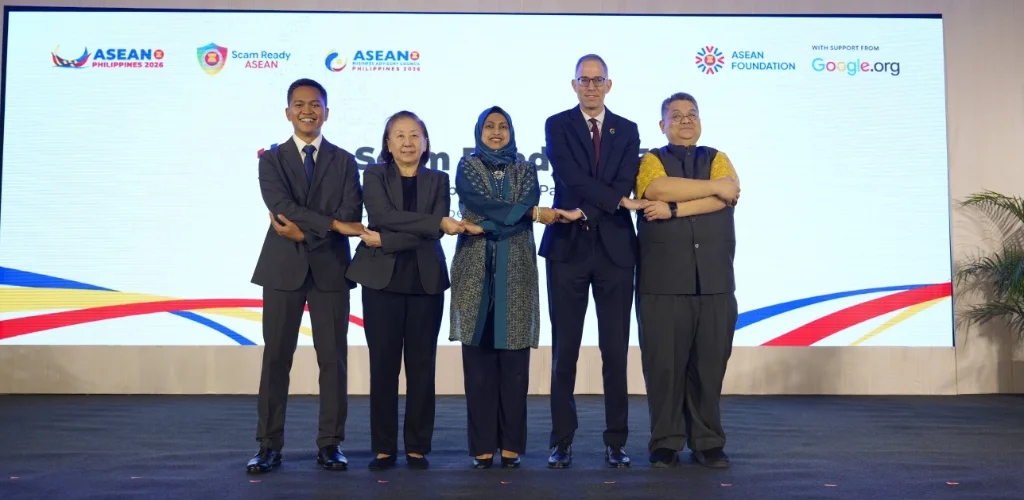
Malaysians now have a free place to learn how online scams work and how to avoid them. The ASEAN Foundation, with support from Google.org, has launched the Scam Ready ASEAN Resource Hub, a digital learning platform built to help people across Southeast Asia recognise scams before they lose money.
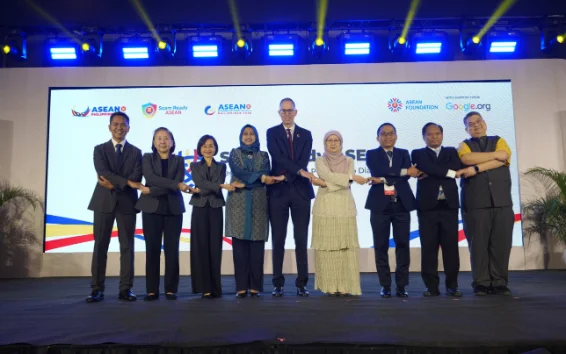
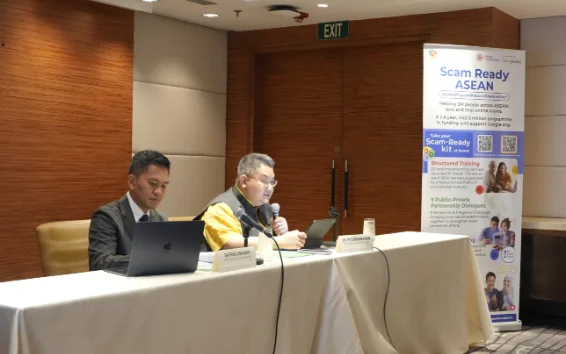
The platform was unveiled at the first Scam Ready ASEAN Public-Private Partnership Dialogue in Metro Manila, held on 10 and 11 November 2026. It is part of a wider regional effort to reach 3 million people with scam prevention education by 2027.
Table of Contents
What the Scam Ready ASEAN Resource Hub Offers
The hub, available at ScamReadyASEAN.org, offers a curriculum shaped by internet safety specialists from the Internet Society (ISOC) and the Global Cyber Alliance (GCA), with input from local implementing partners in each country.
Users can also play Be Scam Ready, Google’s educational game that walks players through common scam scenarios so they can practise safer decisions without any real-world risk. A directory of scam reporting hotlines and contact centres across all 11 ASEAN Member States completes the platform.
The hub sits under Scam Ready ASEAN, a programme the ASEAN Foundation is running from 2025 to 2027 with US$5 million in funding from Google.org. Its activities cover structured training, gamified learning, awareness campaigns and public-private dialogues.
Why Scam Prevention Matters for Malaysians
The numbers explain the urgency. Communications Minister Datuk Seri Fahmi Fadzil reported that online scams cost Malaysians RM958 million in the first half of 2026.
Home Ministry figures put total losses for 2025 at RM2.97 billion, with investment scams the largest category at RM1.46 billion.
Regionally, the Global Anti-Scam Alliance (GASA) estimates that scams cost Southeast Asia about US$23.6 billion in 2024. AI-driven deception, instant payments and cross-border platforms are making schemes harder to trace.
RiseMalaysia has previously looked at how these tactics play out, from AI-themed phishing emails to real-life cyber scam stories.
Manila Dialogue Puts Cooperation First
The two-day dialogue gathered government, business, financial, non-profit and academic representatives to work on information sharing, community protection and cross-sector coordination.
Dr. Piti Srisangnam, Executive Director of the ASEAN Foundation, said effective scam prevention depends on institutions sharing knowledge and understanding how their efforts complement one another. With the hub now live, he said, “that learning can continue well beyond this room.”
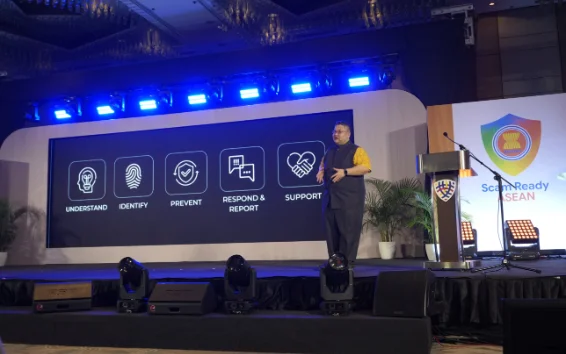
On the second day, ASEAN sectoral bodies and the programme’s local implementing partners (LIPs) were scheduled to discuss delivery challenges and ways to align their work. Manila is the first of at least nine regional and national dialogues planned across ASEAN.
Scam Ready ASEAN Progress Since Its Malaysia Launch
Since its official launch in Malaysia in April 2026, the programme has brought in 20 LIPs across all 11 ASEAN Member States. It has also recruited 2,332 Master Trainers, above its target of 2,000, to train at least 550,000 learners.
Another 151 ASEAN Digital GrandPals are focused on older people, aiming to reach at least 22,000 seniors and their communities. Community work involving 23 “Scam Ready Movers” and 15 “ASEAN GAS!” content creators is expected to reach 20,000 people by year-end, while online awareness efforts have passed 8 million impressions.
In Malaysia, the programme works with the Malaysia Cyber Consumer Association (MCCA) and Ratio, which bring experience in consumer protection, digital literacy and community engagement.
Google Brings Be Scam Ready to More Malaysians
Google is also expanding Be Scam Ready across Southeast Asia. In Malaysia, it is working with the #JanganKenaScam campaign led by the Association of Banks in Malaysia (ABM) and the Association of Islamic Banking & Financial Institutions Malaysia (AIBIM). Banking sector input helps keep the content relevant to local users.
David Weller, Senior Director of Google Global Affairs, APAC, said no single organisation can defeat complex scam networks alone, adding that stronger public-private cooperation is needed to build digital resilience in the region.
How to Use the Scam Ready ASEAN Hub
The Resource Hub and its learning modules are free for the public at ScamReadyASEAN.org. More details on the programme are available on the ASEAN Foundation website.