Malaysia’s banking sector continues to invest in stronger digital infrastructure as customers increasingly rely on online services for everyday financial needs.
One example is Hong Leong Bank’s open source transformation, which has helped the bank modernise a critical online business application and improve how quickly new digital capabilities can be deployed. The work has now earned the bank recognition at the Red Hat APAC Innovation Awards 2026 for Malaysia.
Hong Leong Bank recognised for technology modernisation
Hong Leong Bank was named a Malaysian winner in the Virtualization and Cloud-Native Development category.
The annual awards recognise organisations using Red Hat technologies to address operational challenges and support business development. In 2026, 32 organisations across Asia Pacific were recognised, with award recipients drawn from 13 countries.
For Hong Leong Bank, the project centred on improving the scalability of an important online business application.
Its existing architecture and manual processes had created performance limitations. The bank responded by moving the application from a monolithic framework into a containerised environment using Red Hat OpenShift and Red Hat Application Foundations.

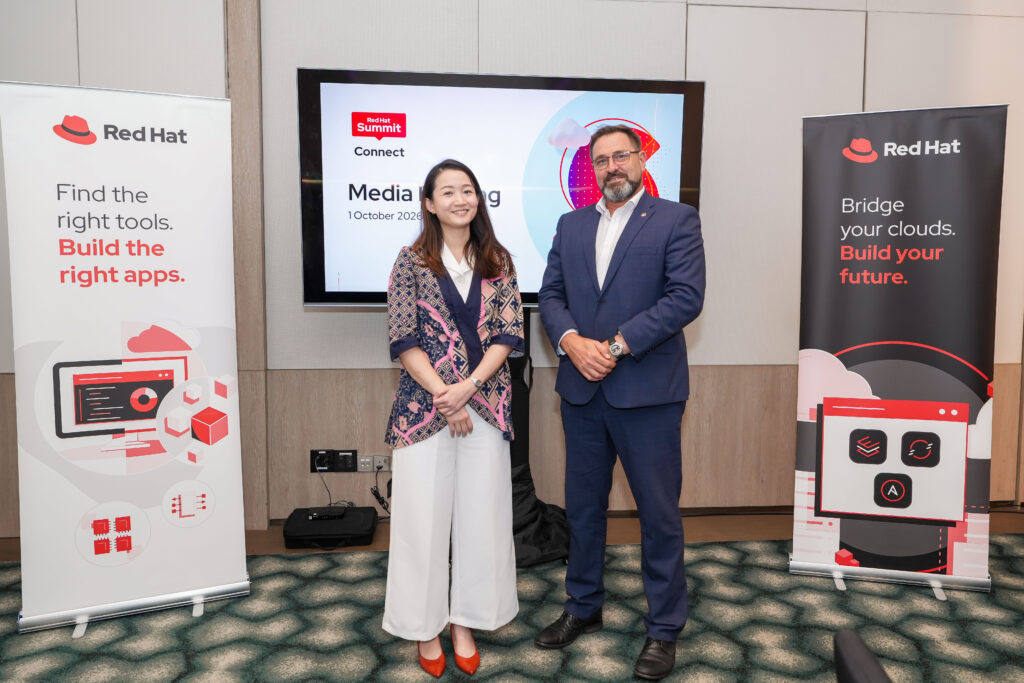
Photo: (Left) Tammy Tan. Country Manager of Red Hat Malaysia, (Right) William Streitberg, Chief Information & Technology Officer at Hong Leong Bank
Moving towards a more flexible banking platform
The bank also deployed Red Hat OpenShift Virtualization as part of efforts to modernise its database infrastructure.
This allows virtual machines and containers to operate through a common platform, giving the bank a more structured route for managing existing systems alongside newer cloud-native workloads.
The shift has produced practical operational gains.
According to the announcement, software deployment cycles have fallen from months to weeks. Manual virtual machine patching for containerised workloads has also been removed, while applications can scale more dynamically when online traffic rises.
These changes matter in banking, where digital platforms must handle fluctuating demand without compromising service reliability.
Open source becomes part of banking digital transformation
Across Asia Pacific, financial institutions are managing a growing mix of cloud services, artificial intelligence, automation and existing technology infrastructure.
This makes flexibility increasingly important. Banks need to introduce new services while continuing to operate systems that support established products and customer transactions.
Open source platforms can provide one route towards that flexibility by allowing organisations to manage different workloads within a more consistent technology environment.
For Malaysia, developments of this kind also support the wider digital economy. More efficient technology infrastructure can help financial institutions shorten development cycles and respond faster to changing customer and business needs.

Building digital services without leaving reliability behind
William Streitberg, Chief Information & Technology Officer at Hong Leong Bank, said upgrading a bank’s technology environment requires careful decisions about what fits its operations.
He said Red Hat had provided a common foundation for the bank’s existing and cloud-native workloads, helping it introduce capabilities faster while maintaining the reliability customers expect.

Photo: William Streitberg, Chief Information & Technology Officer at Hong Leong Bank
That balance is significant. Banking digital transformation is not simply about adopting newer technology. Institutions also have to consider stability, scalability and how new systems work alongside established infrastructure.
Daniel Aw, Vice President and General Manager for APAC at Red Hat, similarly pointed to the need for technology investments to address actual business challenges rather than follow trends.
Why the development matters for Malaysia
Hong Leong Bank’s project shows how infrastructure modernisation can translate into practical improvements behind digital banking services.
Shorter deployment cycles can help technology teams bring updates into production sooner. Dynamic scaling can also support service availability when transaction volumes or online activity increase.
The wider impact goes beyond one bank. As more Malaysian businesses modernise their technology foundations, demand is likely to grow for cloud skills, enterprise software expertise and people who can manage both traditional and cloud-native systems.

Photo: Tammy Tan. Country Manager of Red Hat Malaysia
A foundation for the next stage of digital banking
Hong Leong Bank’s recognition highlights a less visible but important part of Malaysia’s digital banking progress: the infrastructure behind customer-facing services.
Modernisation does not always mean replacing everything at once. In this case, creating a common environment for existing and newer workloads offers a gradual route towards greater scalability and faster delivery.
As Malaysia’s digital economy develops, that ability to modernise while keeping essential services reliable will remain an important part of how banks prepare for future demand.