Malaysia’s push to become a stronger international meetings destination is developing into a sizeable economic opportunity.
The Malaysia business events sector is expected to generate a cumulative economic impact of about RM34.97 billion by 2030, supported by a growing pipeline of international conferences, exhibitions and professional gatherings. Kuala Lumpur sits at the centre of that growth.
The opportunity goes beyond visitor spending. International events bring researchers, investors, industry leaders and young professionals into the same space, opening doors for knowledge exchange, partnerships and new business connections.
Kuala Lumpur Gains Ground as a Meetings Destination
Malaysia ranked 32nd among 142 qualifying destinations in the International Congress and Convention Association’s GlobeWatch Country and City Rankings 2025.
Kuala Lumpur performed even better at city level, ranking 29th globally with 73 qualifying meetings. The result comes as competition among Asian destinations for international events continues to grow.
For Malaysia, these meetings have economic value because delegates spend across hotels, restaurants, transport and local services. They can also create longer-term connections between Malaysian organisations and international partners.
According to figures cited in the supplied material, Malaysia recorded an estimated RM4.07 billion in economic impact from 393 business events in 2025. During the first half of 2026, MyCEB spearheaded 194 events involving more than 341,000 delegates and an estimated RM1.81 billion in economic impact.
A Stronger International Events Pipeline
The longer-term pipeline points to further activity.
As of June 30, MyCEB had secured 416 international business events for the 2026–2030 period. These events are projected to contribute RM8.27 billion and help lift cumulative sector impact to around RM34.97 billion by 2030.
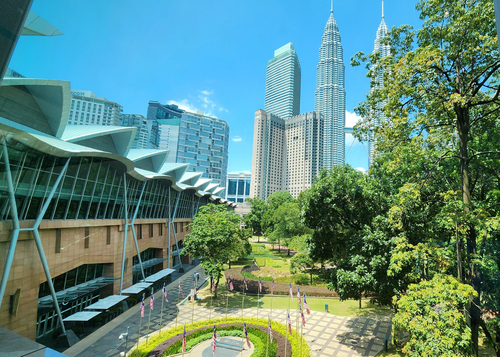
Kuala Lumpur Convention Centre is already playing a major role. It welcomed 756,721 delegates in 2025, including 59,013 international visitors, while generating an estimated RM1.5 billion in economic impact for Malaysia.
The Centre has also secured more than 15 international association conferences for 2027, following 19 confirmed conferences for 2026.
Meetings Bring Knowledge Alongside Spending
The value of business events is not limited to delegate numbers.
Recent gatherings in Kuala Lumpur have covered healthcare, artificial intelligence, energy transition and international trade. Health Summit Asia 2026, for example, brought together healthcare providers, policymakers and innovators to discuss issues including AI-powered diagnostics and preventive care.
The Energy Transition Conference 2026 attracted policymakers, investors, academics and industry stakeholders from more than 60 countries. About 4,000 delegates attended the three-day event focused on the relationship between energy and AI.
These meetings give Malaysian researchers, companies and professionals direct access to international expertise without having to travel abroad. For younger Malaysians, related programmes can also provide exposure to industries that may shape future careers.
Trade Events Create Opportunities for Malaysian Businesses
Exhibitions can create more immediate commercial opportunities.
The Malaysia Gifts Fair 2026 brought together more than 16,000 trade professionals. Malaysian Brand Day, meanwhile, connected participating businesses with 13 international buyers from 11 countries through a MATRADE-supported business-matching programme.
The initiative generated an estimated RM61.3 million in potential export sales, according to the supplied feature.
That illustrates how the meetings industry can connect tourism activity with trade development. Hotels and transport providers benefit from visitor spending, while Malaysian businesses gain access to buyers, investors and potential partners.
Sustainability Becomes Part of the Competition
Environmental performance is also becoming more relevant as international organisers consider the footprint of travel and large-scale events.
Kuala Lumpur Convention Centre has introduced a climate roadmap towards 2050 covering greenhouse gas emissions, water and waste. The venue also holds ISO 20121 and EarthCheck Gold certifications, according to the source material.
This matters as Asian cities compete for international conferences not only on facilities and connectivity, but also on the wider quality and sustainability of the event experience.
Building Value Beyond the Event
Malaysia’s business events growth has a wider public and economic benefit. Conferences support hospitality jobs and local suppliers, while professional gatherings can strengthen research networks, industry skills and international business relationships.
The RM34.97 billion projection is therefore only part of the story. The longer-term opportunity lies in what remains after delegates leave: stronger connections, greater international visibility and more opportunities for Malaysian businesses and talent.
For Kuala Lumpur, maintaining that momentum will depend on collaboration, service quality and the ability to keep attracting events with economic and knowledge value.