Malaysia is widening the use of digital technology in agriculture as it looks for practical ways to improve farm productivity and strengthen food security.
The latest push for Digital AgTech Malaysia brings artificial intelligence (AI), data platforms, automation and digital marketplaces closer to farmers and other players in the agri-food sector. It also connects agricultural modernisation with Malaysia’s wider digital economy ambitions.
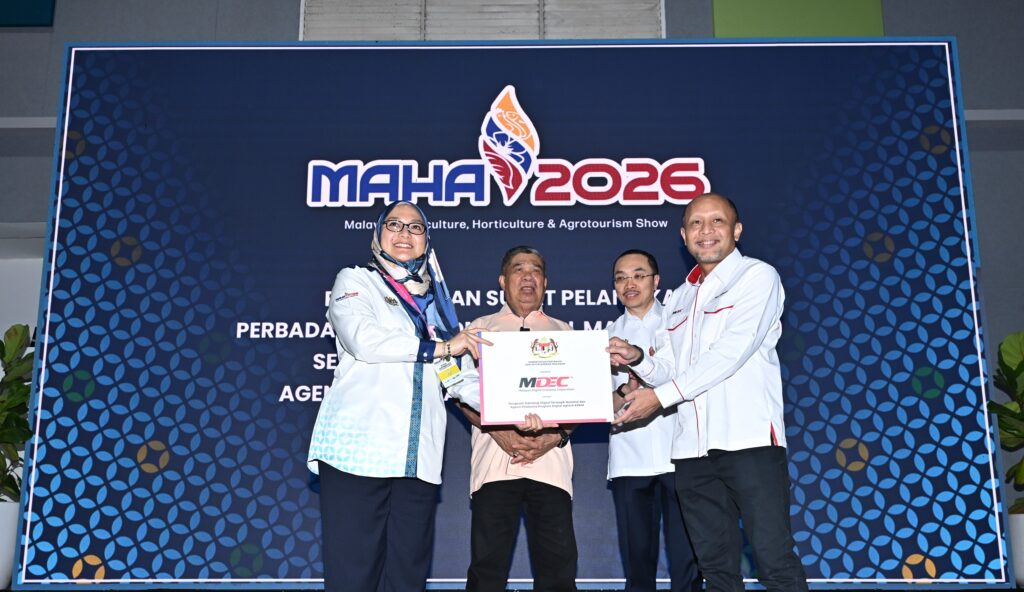
At MAHA 2026, the Ministry of Agriculture and Food Security (KPKM) appointed the Malaysia Digital Economy Corporation (MDEC) as a National Strategic Digital Technology Validator and implementing agency for KPKM’s Digital AgTech programme.
The appointment was announced alongside three initiatives: i-AGRI, BidFresh and Agrovator@Sekolah.
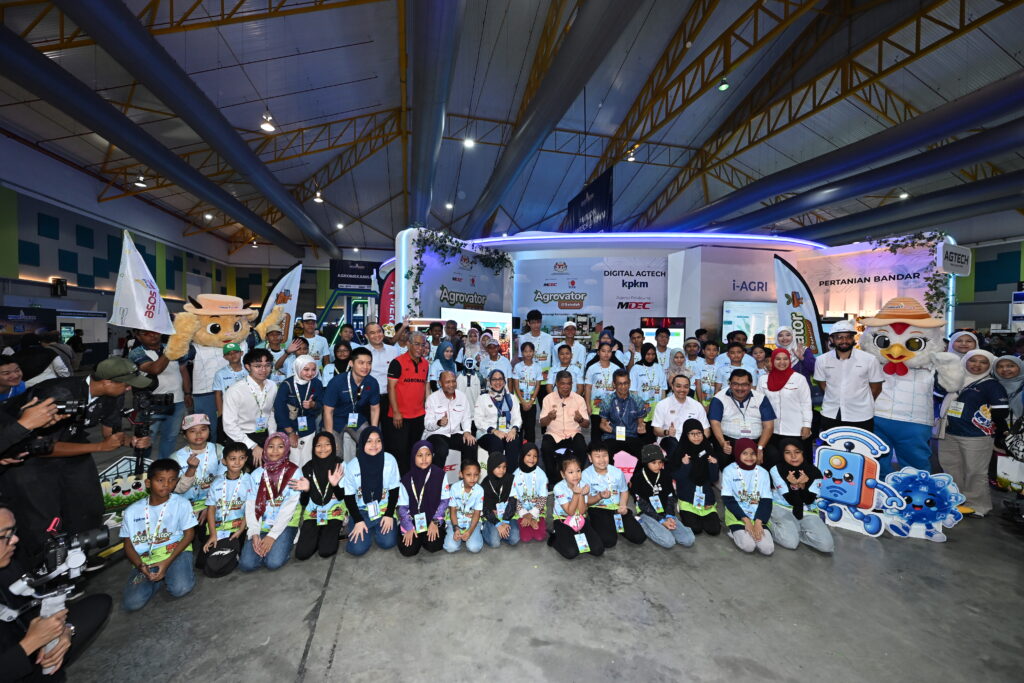
Photo: YB Datuk Seri Haji Mohamad Bin Sabu, Minister of Agriculture and Food Security, together with the leadership of MAFS and MDEC, strategic partners and finalists of the Agrovator@Sekolah Programme at MAHA 2026.
Digital tools move deeper into agriculture
Agriculture is becoming an increasingly important testing ground for Malaysia’s digital transformation.
According to MDEC, more than 800 Digital AgTech systems have been installed nationwide by local technology companies with Malaysia Digital status. More than 100 of these systems use AI.
The deployments cover crops, livestock, fisheries and aquaculture. MDEC also said more than 30,000 participants have received training or exposure to Digital AgTech technologies.
These solutions include Internet of Things (IoT) systems, automation, smart monitoring and data analytics. On farms, such tools can support better resource management, reduce operating costs and help producers monitor output more closely.
The significance goes beyond introducing new technology. Wider adoption could help smaller agricultural businesses make decisions using better information while giving technology companies opportunities to develop solutions for a major part of the real economy.
i-AGRI puts data behind agricultural planning
One part of the programme is i-AGRI, an integrated platform developed by MDEC with KPKM, the Ministry of Digital and the Ministry of Economy.
It brings information on technology adoption across crops, livestock, fisheries and aquaculture into one platform. Statistics, maps, charts and interactive displays are designed to show where agricultural technology is already being used and where gaps remain.
For policymakers, that could make interventions more targeted.
Instead of treating agricultural digitalisation as one broad national challenge, authorities can use adoption data to identify areas or subsectors that may need greater support. Better visibility could also help agencies monitor programmes and allocate resources more effectively.
BidFresh aims to improve market access
Technology adoption alone does not solve every challenge faced by agricultural producers. Getting products to buyers efficiently is another part of the equation.
BidFresh is intended to connect agricultural entrepreneurs directly with buyers through a digital platform. It supports market matching, information sharing and transactions.
For producers, wider access to buyers may create new business opportunities while improving transparency in the supply chain. This is particularly relevant for smaller operators that may have good products but limited market networks.
Digital marketplaces can also complement smart farming systems. One improves how food is produced; the other can help improve how it reaches the market.
Building the next generation of AgTech talent
Malaysia’s agricultural transformation will also depend on whether young people see a future in the sector.
Agrovator@Sekolah addresses that issue from the talent side. The programme introduces primary and secondary school students to AI, IoT, automation and smart agriculture through interactive learning and innovation challenges.
Its first phase involved 500 students from more than 80 schools nationwide, according to MDEC. A second phase is scheduled to begin in October 2026. DXN Holdings Berhad is participating as a strategic partner.
Early exposure matters because modern agriculture increasingly requires a mix of farming knowledge and digital skills. Future jobs in the sector may involve sensors, software, automated systems and data alongside traditional agricultural expertise.
That changes how younger Malaysians may view agriculture: not simply as farm work, but as a field with room for technology, entrepreneurship and problem-solving.
Why Digital AgTech matters for Malaysia
The broader value of these initiatives lies in connecting technology with food production and economic development.
MDEC chief executive officer Anuar Fariz Fadzil said food security and digital economic development are closely linked national priorities. He said the programmes are intended to help farmers and agricultural entrepreneurs improve efficiency, widen market opportunities and strengthen the resilience of the country’s food supply.
The programmes also support Malaysia Digital 2030 and the country’s ambition to become an AI nation by 2030. They align with the National Agrofood Policy 2021–2030 and National Food Security Policy 2030, according to the media release.
The practical test, however, will be adoption.
Technology needs to be affordable, useful and accessible to agricultural operators of different sizes. Training will matter too. A sophisticated platform has limited value if farmers cannot comfortably use it or see a clear improvement in their daily operations.
From AI ambition to practical economic value
Malaysia’s AI ambitions will ultimately be judged by how technology improves real industries and everyday outcomes.
Agriculture offers a clear opportunity. Better data can support planning, automation can improve efficiency, digital marketplaces can widen access to customers, and early education can build a new pipeline of AgTech talent.
The launch of i-AGRI, BidFresh and Agrovator@Sekolah therefore represents more than another round of digital programmes. Together, they show how Malaysia can connect its digital economy agenda with a basic national priority: producing and distributing food more efficiently.
If adoption continues to broaden, Digital AgTech could become an important part of Malaysia’s move towards a more productive, technology-enabled and resilient agri-food sector.