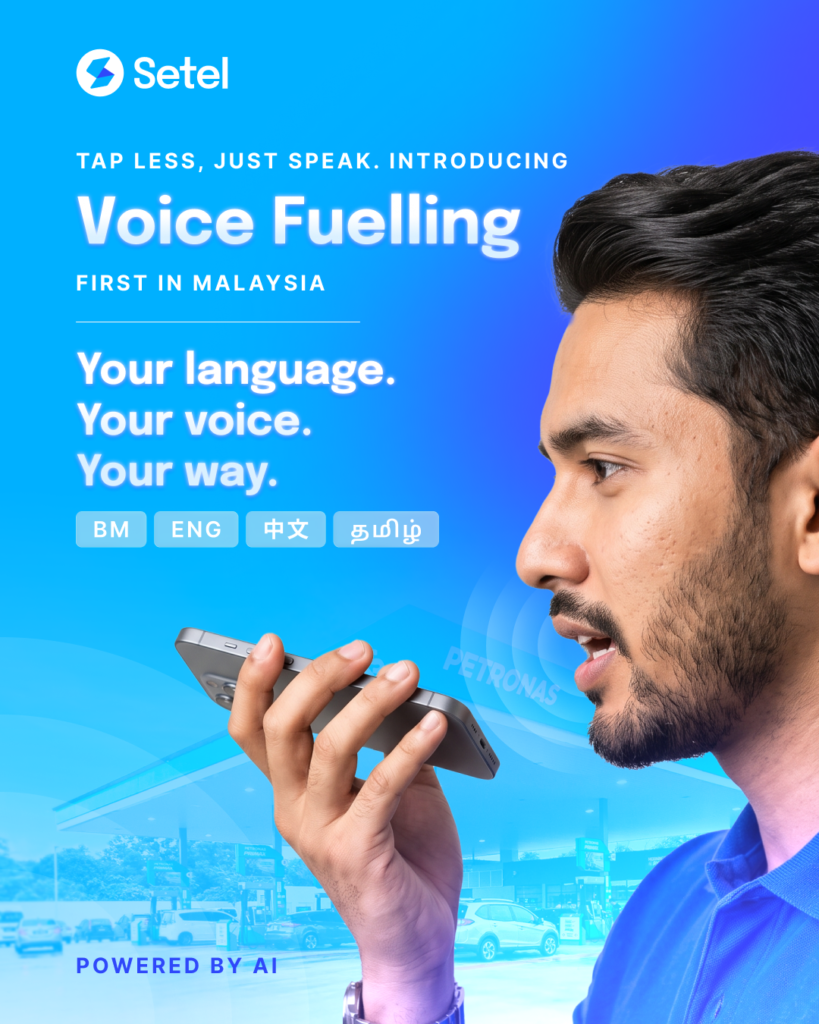
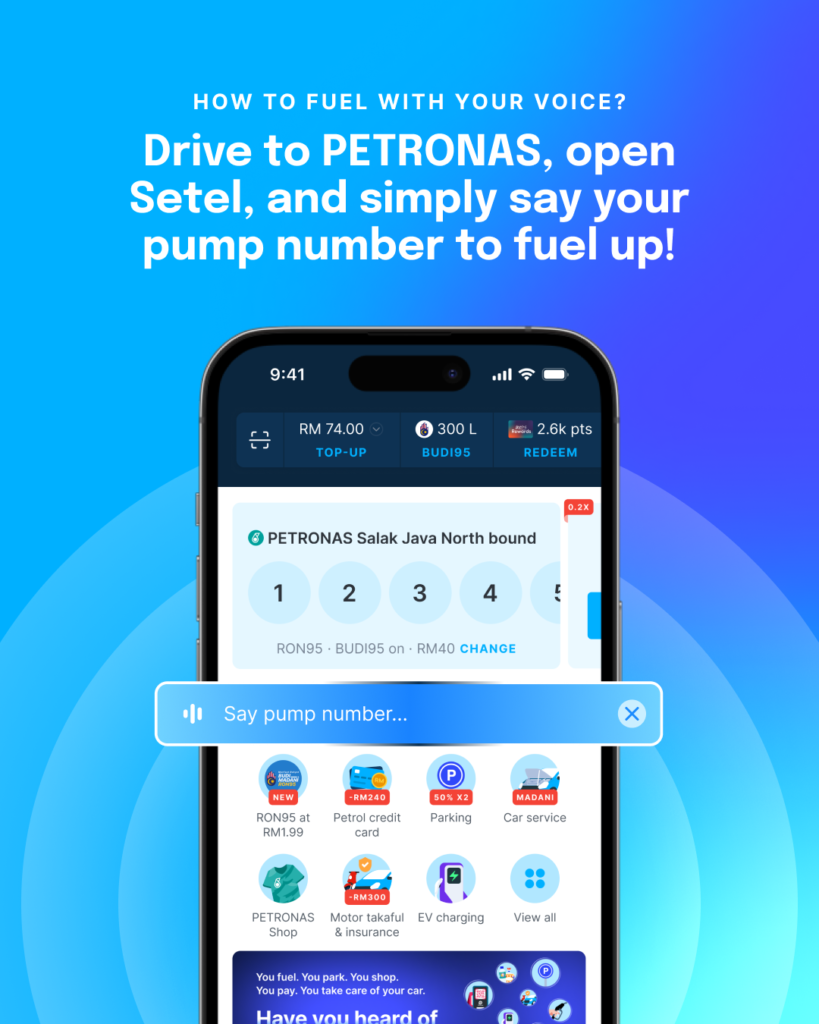
Malaysia’s digital mobility experience is getting a more local touch. Setel has introduced Setel Voice Fuelling, a new feature that allows motorists to activate a fuel pump simply by speaking their pump number.
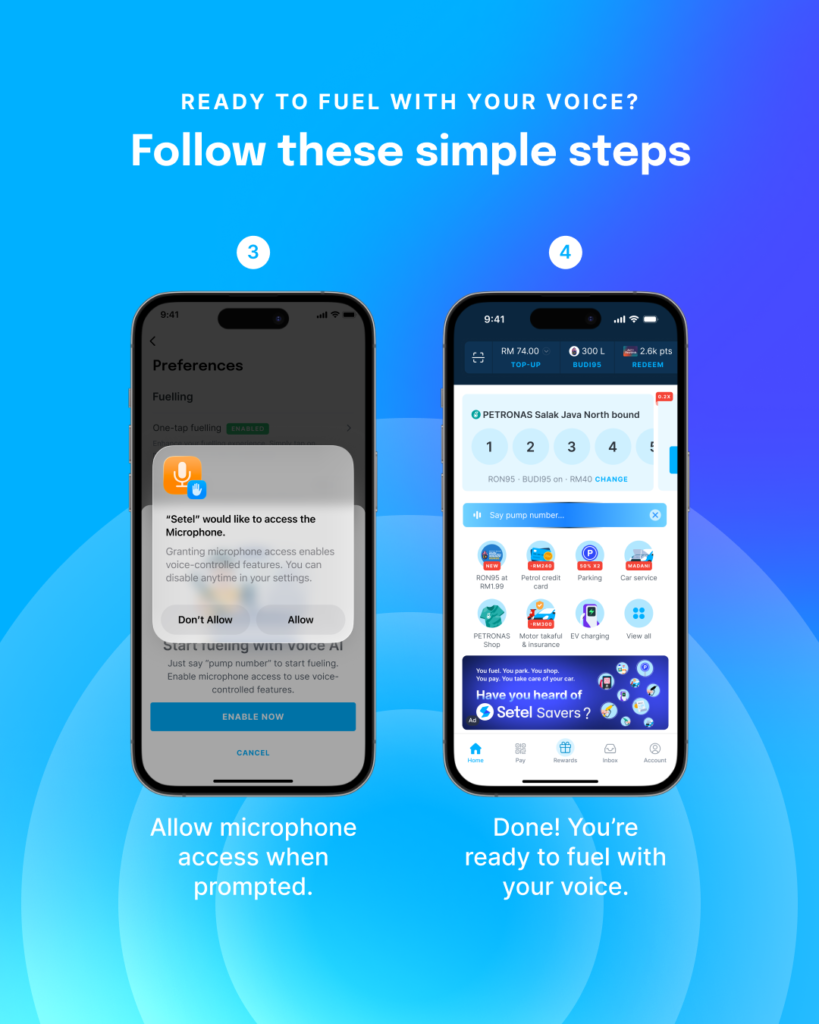
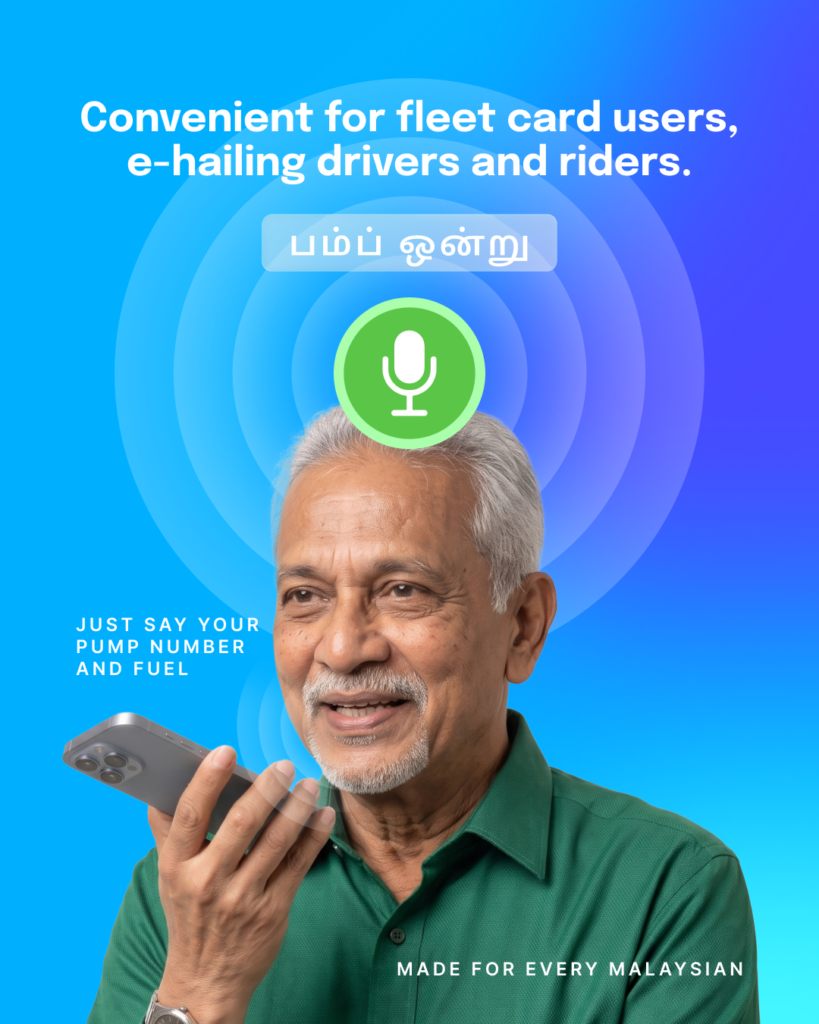
Currently in beta, the AI-powered feature supports English, Bahasa Melayu, Mandarin and Tamil. It builds on Setel’s existing One-tap Fuelling service, but removes another step from the process by allowing users to speak instead of navigating through several taps.
The development also shows how artificial intelligence is moving beyond business software and online services into everyday activities. In this case, the technology is being used at petrol stations, where convenience and ease of use can make digital services more approachable to a wider group of Malaysians.
Making Digital Fuelling More Accessible
Voice Fuelling is designed for different types of road users, including motorists, motorcyclists, e-hailing drivers and fleet operators.
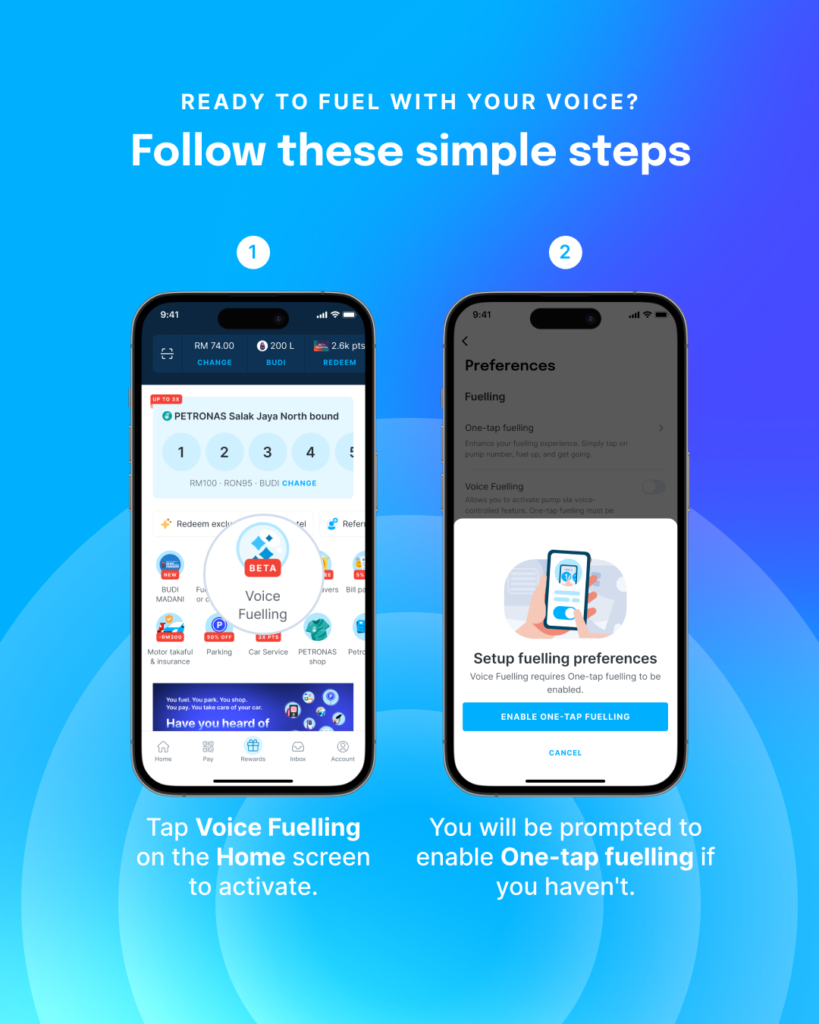
Once the feature is enabled in the Setel app, a customer can state the pump number. Setel’s AI then processes the transaction according to the user’s existing payment method and fuelling preferences.
Supporting four widely used languages is an important part of the feature. While Malaysia has seen strong adoption of mobile services, people have different levels of comfort with apps and digital interfaces.
Voice commands could make the process simpler for users who prefer speaking to tapping, particularly those still becoming familiar with app-based services.
PETRONAS dealers and ground crew will also support on-ground activations to introduce customers to the feature and help them get started.
AI Moves Into Everyday Mobility
The introduction of Setel Voice Fuelling reflects a wider shift in how AI can be applied.
Much of the public conversation around artificial intelligence has focused on chatbots, workplace productivity and content creation. Consumer-facing uses, however, are increasingly becoming part of routine transactions.
For Setel, the aim is to reduce friction during fuelling rather than add another complicated digital function.
Setel CEO Abdullah Ayman Awaluddin said the company sees technology as a way to make everyday activities easier. He added that allowing customers to communicate in a language they are comfortable with can make technology feel more natural and welcoming.
That approach has wider relevance for Malaysia’s digital economy. Digital adoption is not only about introducing more technology. Services also need to be practical for people with different languages, devices and levels of digital confidence.
Building a Broader Mobility Platform
Setel began operating in 2018 and has since expanded beyond petrol payments.
Its app now covers services including parking, EV charging, road tax renewal, motor takaful and insurance, auto assistance and other mobility-related transactions. The company also offers Setel Lite for users with slower internet connections and older Android devices.
This broader ecosystem points to an important change in Malaysia’s mobility sector. Apps that started by solving one transaction are increasingly becoming platforms covering several parts of a journey.
Voice technology could become another layer of that shift if customers find it faster and easier to use.
Rewards Support Early Adoption
Setel is also offering incentives for new users.
Customers who download the app, register, verify their account and fuel at least one litre can earn five times Mesra Rewards points, capped at 500 points. The offer is available once per user and applies to RON95, RON97 and Diesel, including BUDI95 and BUDI Diesel. It is not limited to Voice Fuelling. Terms and conditions apply.
Existing users can access other programmes including Setel Savers and Refer a Friend, while the Full Thank campaign will continue through the end of 2026.
Why This Matters for Malaysia
The public value of multilingual voice technology lies in accessibility.
Malaysia is a multilingual society, and digital services that account for how people actually communicate can lower barriers to adoption. For businesses, this can also broaden the group of customers comfortable using digital payments and app-based services.
For the mobility sector, the launch offers a practical example of AI being integrated into an existing service rather than introduced as a standalone product.
As the beta progresses, the real test will be how comfortably Malaysians use voice commands at fuel stations and whether the experience saves meaningful time. If adoption grows, similar voice-based interactions could find their way into other everyday mobility services.
Conclusion
Setel Voice Fuelling brings AI into a familiar Malaysian routine: filling up a vehicle.
Its significance is less about replacing taps with speech and more about making digital mobility easier to use across different languages and user groups. That could become increasingly important as Malaysia’s transport and payment services become more connected. For more information, visit the Setel app, www.setel.com