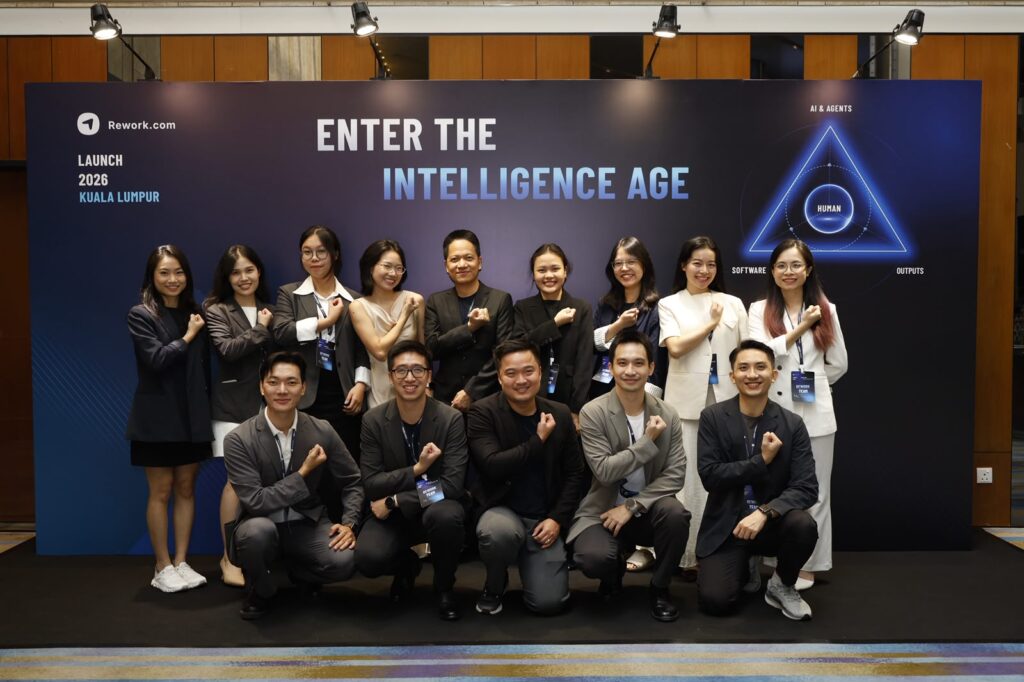
Malaysian companies are experimenting with artificial intelligence, but turning those experiments into everyday business operations remains a challenge. Rework.com is looking to address that gap with the launch of Rework Agentic OS Malaysia, a platform designed to bring employees, AI agents, company data and workflows into one operating environment.
The global B2B technology company introduced Agentic OS for Business at Rework Launch 2026 in Kuala Lumpur. According to Rework, its platform is already used by more than one million users across 12,000 companies.
Malaysia’s AI Adoption Moves to the Next Stage
Malaysia has attracted significant investment into its digital economy. The press release cites Malaysia Digital Economy Corporation data showing RM87.4 billion in digital investments in 2025.
Yet investment does not necessarily mean businesses are using AI deeply across their operations. Rework also cited research from Strand Partners indicating that 67% of Malaysian AI adopters still mainly use basic applications such as chatbots. Only 19% have a formal strategy for expanding AI across multiple business functions. These figures should be independently verified before publication.
That gap creates an opening for enterprise technology that moves AI beyond individual productivity tools.
Instead of asking employees to use separate AI applications, companies are beginning to explore how AI can work within sales, marketing, human resources, communications and other business processes.
Connecting AI With Everyday Business Operations
Agentic OS for Business is built around two main layers.
The first is its Intelligence Architecture, which connects business information and knowledge with several types of AI tools. These include Service AI, AI Assistant, AI Desktop and Workflow AI.
The second covers Business Services. These are interconnected services spanning marketing, sales, work management, employee operations and company communications.
For businesses, the idea is relatively straightforward: give AI agents enough organisational context to assist with real work rather than operating as standalone tools.
This could include managing sales pipelines, supporting customer communication, coordinating projects, processing internal requests or handling routine employee services.
Organisational Knowledge Becomes More Valuable
Rework founder and CEO Eric Pham said the AI adoption gap among Malaysian companies is less about access to AI models and more about having the infrastructure needed to integrate the technology into actual workflows.
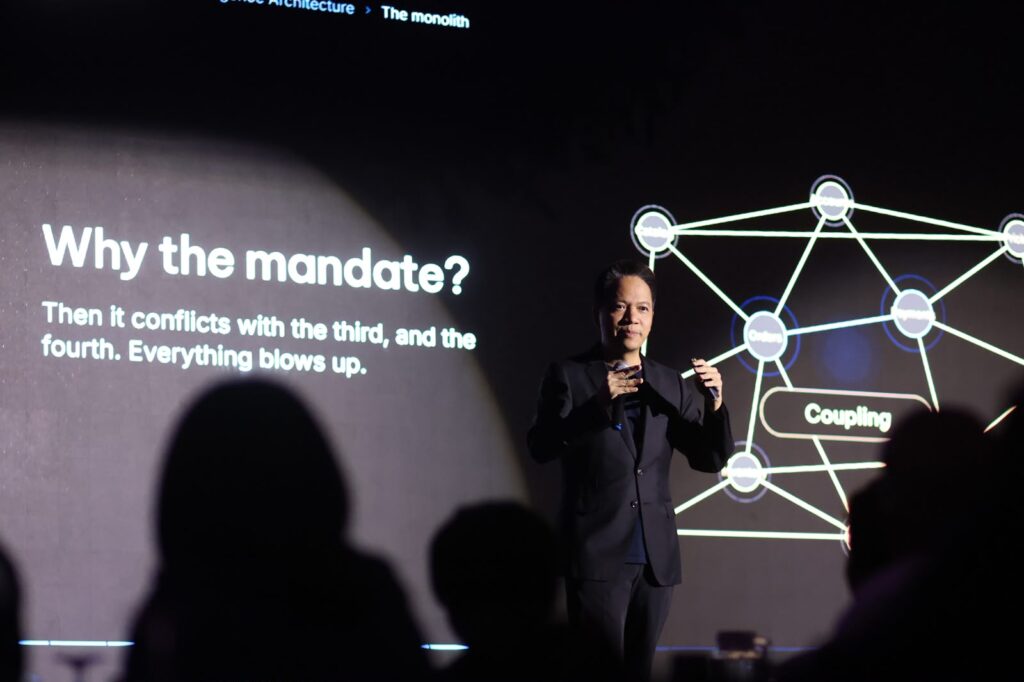
Photo: Eric Pham, founder and CEO of Rework
The company calls the resulting pool of reusable processes, decisions, customer history and business experience “organisational intelligence”.
This reflects a wider shift in enterprise AI. As AI models become more widely available, companies may increasingly differentiate themselves through how well they connect the technology with their own data, processes and institutional knowledge.
For Malaysian SMEs and larger enterprises, that also raises practical questions around implementation. Businesses need to decide which processes should be automated, where employees should remain responsible for decisions, and how company data is managed when AI agents become part of daily operations.
Enterprise AI Could Support Productivity Growth
The potential impact goes beyond adopting another software platform.
Better integration between people, workflows and AI could help businesses reduce repetitive administrative work and make information easier to reuse across departments. For growing companies, it may also help teams manage more complex operations without creating additional disconnected systems.
Rework co-founder and COO Brian Trinh said businesses need to rethink how work is designed and how people and AI agents operate together, rather than simply adding another AI application to an existing software stack.
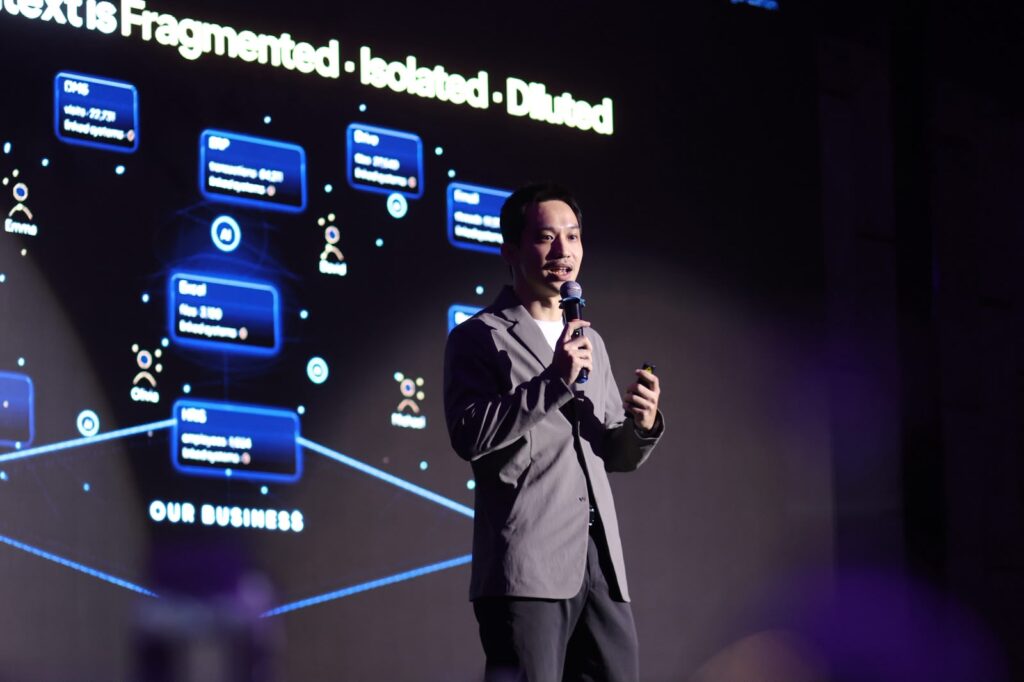
Photo: Brian Trinh, co-founder and COO of Rework
That issue is becoming increasingly relevant as Malaysia pushes ahead with digital transformation. Enterprise AI adoption could influence productivity, workforce skills and the competitiveness of local companies, particularly if more SMEs gain access to practical automation tools.
Kuala Lumpur Launch Highlights Business Interest
Rework’s inaugural Malaysian launch event gathered about 150 senior business leaders. The programme included discussions on the changing role of AI in business, product demonstrations and customer examples.
Agentic OS for Business is now available in Malaysia. The launch adds another enterprise AI option for companies exploring how artificial intelligence can move from experimentation into wider business operations.
The bigger development will be how businesses use such platforms in practice. AI adoption alone does not guarantee higher productivity. Companies will still need clear processes, suitable skills and responsible management of their data and automated workflows.
A New Phase for Malaysia’s Digital Businesses
Malaysia’s next stage of AI adoption is likely to focus less on whether companies use AI and more on how deeply it becomes part of their operations.
Platforms such as Rework Agentic OS point towards that next phase, where employees and AI systems work within connected business processes rather than separate applications.
For Malaysia’s digital economy, the potential value lies in turning AI investment into practical gains in productivity, knowledge management and business competitiveness.