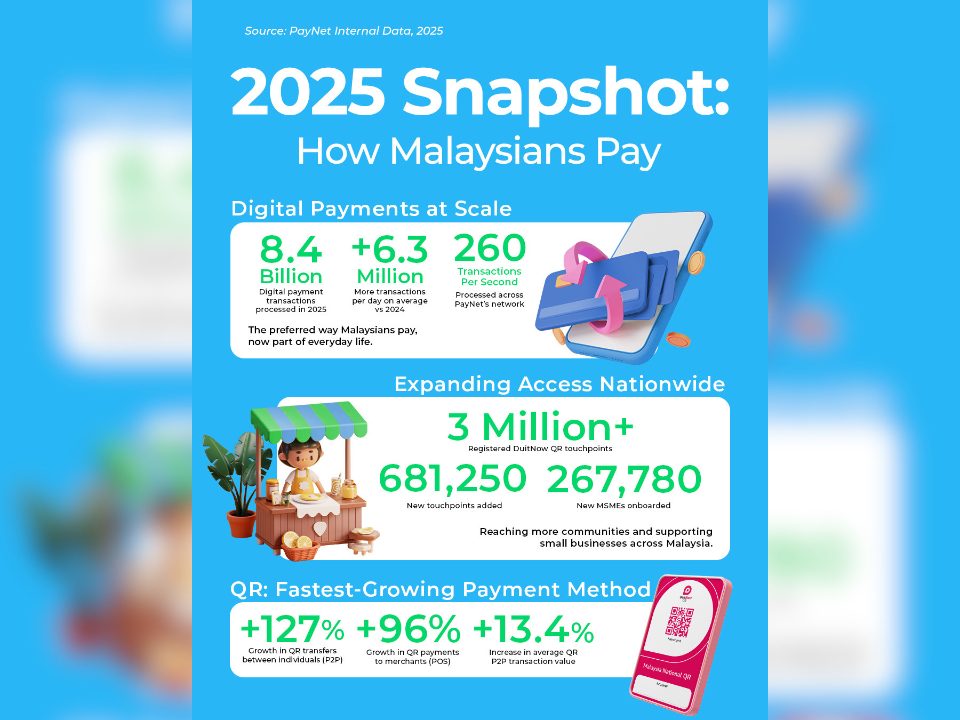
Malaysia’s shift toward cashless transactions is becoming more visible each year. In 2025, digital payments Malaysia 2025 reached 8.44 billion transactions, according to Payments Network Malaysia (PayNet).
This reflects a clear change in how people pay for daily needs. From retail shopping to transport and peer-to-peer transfers, digital payments are now part of everyday life.
A Growing Preference for Cashless Payments
The increase in transactions shows how widely digital payments are used across the country. Consumers, businesses, and even public services are relying more on cashless methods.
This trend is supported by national efforts led by Bank Negara Malaysia. The focus has been on building a system that is accessible, safe, and efficient for everyone.
As a result, digital payments are no longer just an option. They are becoming the preferred way to pay.
Expansion Across Businesses and Communities
Growth in 2025 was driven by wider participation across the ecosystem. Banks recorded a 30.69% increase in transaction volumes, while non-bank players saw even faster growth at 71.7%.
This shows that the ecosystem is becoming more diverse, with more players involved in offering payment services.
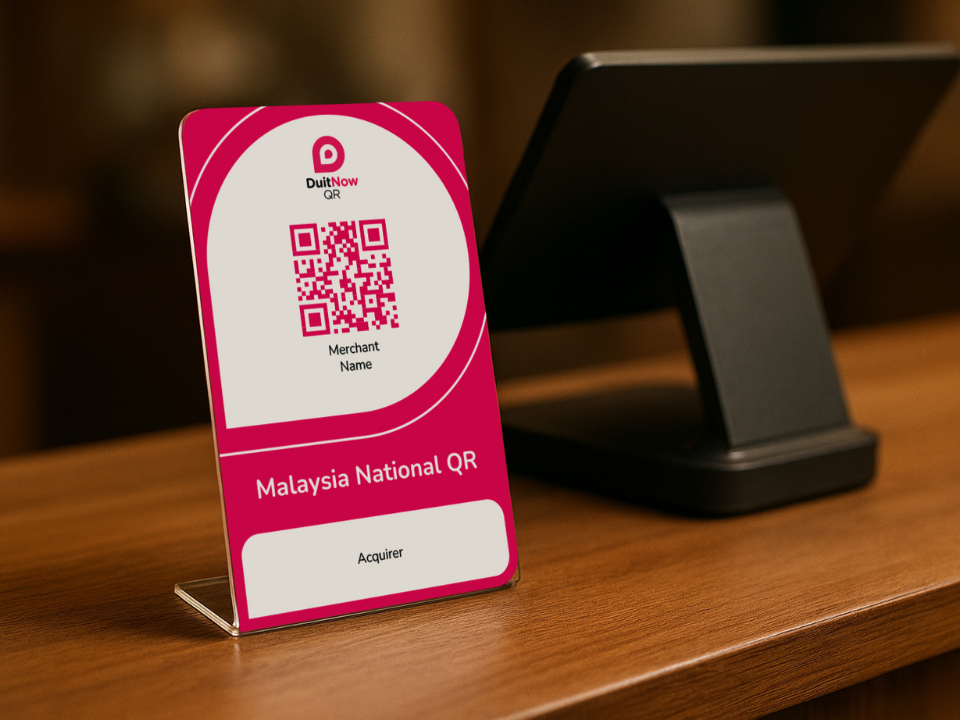
Access has also improved. Over 681,000 new DuitNow QR acceptance points were added, including many used by small businesses. This brings the total to more than three million touchpoints nationwide.
Adoption is not limited to cities. States like Terengganu, Kelantan, and Kedah saw strong growth, with transaction volumes in non-urban areas tripling year-on-year.
Daily Usage and Real-Life Integration
Digital payments are now used across many parts of daily life. People use them for shopping, transport, sending money, and small business transactions.
On average, there were 6.3 million more transactions per day compared to 2024. Activity also increased during festive seasons, showing how deeply digital payments are integrated into social and economic activities.
Programmes like PayNet Digital Campus and Cashless Boleh have helped drive adoption, especially among students and public sector users.
Strengthening Security and Trust
As usage grows, security becomes more important. Financial scams are becoming more complex, using tools like AI and social engineering.
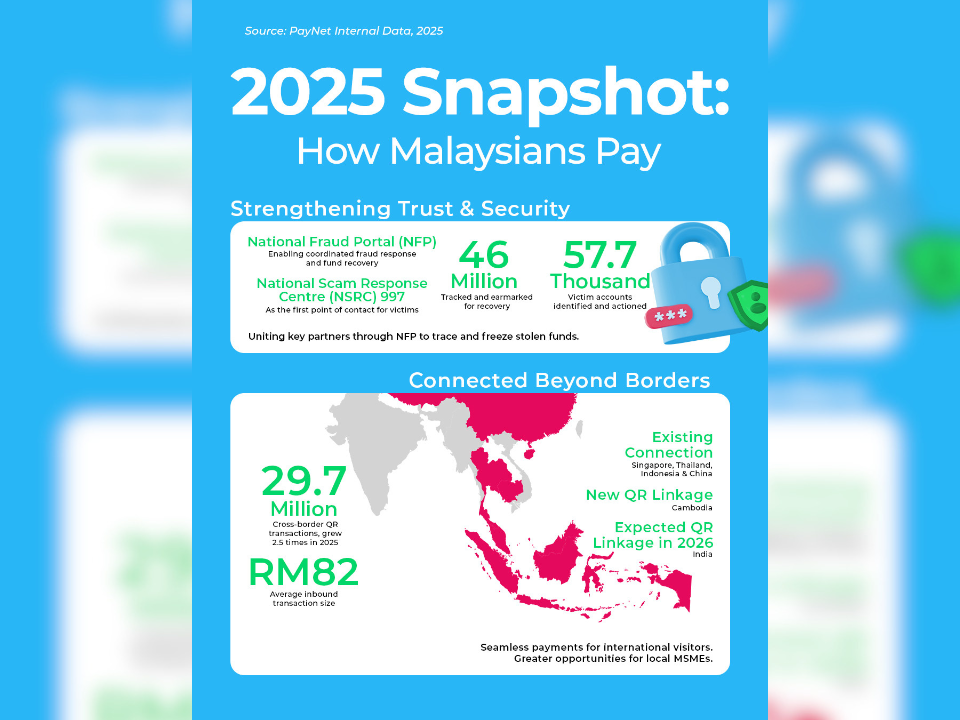
To address this, industry players have improved coordination. The National Fraud Portal allows banks and institutions to share information and respond faster to suspicious activities.
In 2025, about 57,700 victim accounts were identified, with around RM46 million in funds being processed for recovery.
At the same time, system reliability remains high. PayNet processed an average of 260 transactions per second while maintaining 99.995% service availability.
Expanding Beyond Borders
Malaysia is also extending its digital payment network beyond its borders.
New QR payment linkages have been introduced, including a connection with Cambodia. Existing connections with Singapore, Thailand, Indonesia, and China are already in place, with India expected to follow.
Cross-border QR transactions grew 2.5 times to 29.7 million in 2025. This allows Malaysian businesses, especially small ones, to reach customers from other countries more easily.
It also supports tourism, especially under initiatives like Visit Malaysia 2026.
Supporting Malaysia’s Digital Economy
The growth of digital payments reflects a larger shift in Malaysia’s economy. More people are using digital tools, and businesses are adapting to meet new expectations.
This creates opportunities for fintech companies, small businesses, and service providers.
At the same time, it shows the importance of having a strong and reliable payment system that can support growth at scale.
A More Connected Payment Future
Digital payments in Malaysia are no longer just growing. They are becoming part of the country’s economic foundation.
With stronger infrastructure, better security, and wider access, the system is moving towards a more connected and inclusive future.